
INITIAL IDEA
When Amazon approached me to help develop the vehicles, the Fright Fighter was first in line. It had to feel distinct from the obvious Dune ornithopter direction.
I immediately saw an opportunity to push the vehicle through stronger angles, more dynamic proportions, and a completely new wing mechanism. I told them I wanted to explore that direction and started investigating it right away.
But since Masters of the Universe was one of my favorite movies growing up, I wanted to push the project as far as possible. Instead of stopping at basic concepts, I developed the ideas further and created full animations to test the mechanisms, movement, and overall potential of the vehicle — exploring how far the design could actually go.
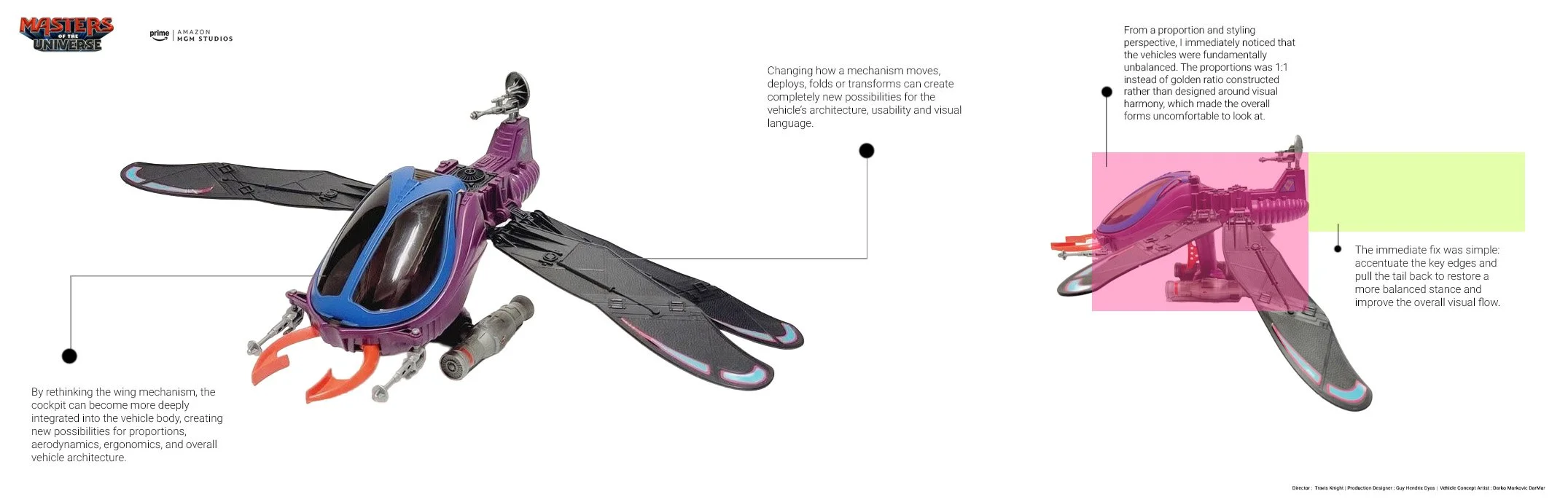
MINDMAP where vehicle can be lead to
Form follows function and opens new vehicle direction.
I delivered the initial shapes and explored where the Fright Fighter could go, but I also developed a full animation of the mechanism.
The mechanism and cockpit offered a huge opportunity to give the vehicle a distinctive visual identity. I approach every vehicle with industrial and automotive design logic, so the mechanism wasn't just a functional feature it could fundamentally change the proportions, silhouette, and character of the vehicle.
This is where my imagination and my drive to create something that hadn’t been seen before really started to shine.
My expertise in shapes, form, function, iteration, animation, and presentation also paid off. I could design the idea, test how it worked, iterate quickly, and present it in a way that made the direction immediately understandable to the Production Designer. The project was moving in the right direction.
The deadline was extremely tight, but I was ready to make it work. From the moment I showed the animation to the Production Designer, I had a clear sense of where the design could go, and he was able to choose what he likes and present to Director.
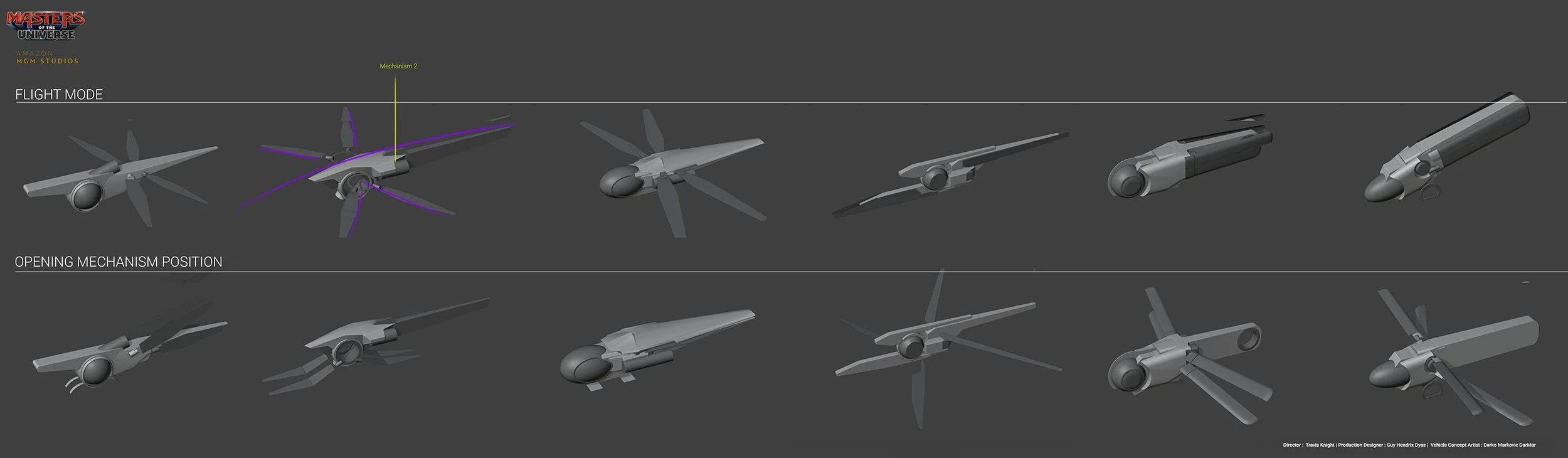
New Function, New Direction
If you look closely at the vehicles, I specifically elongated the body to create a stronger sense of speed and forward movement. I also positioned the wings so that their movement could be optimized as a functional mechanism - something I consistently build into my vehicle designs.
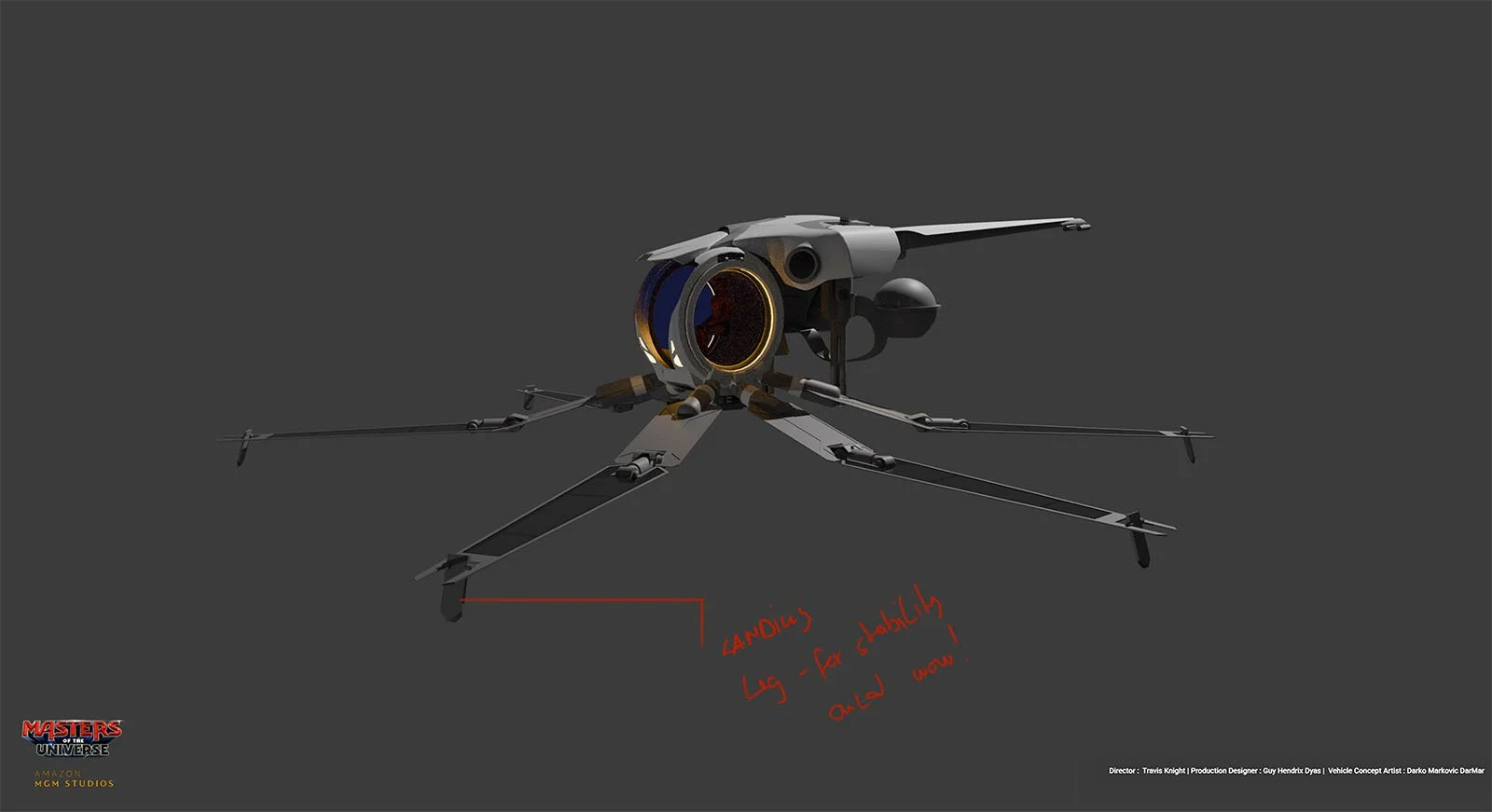
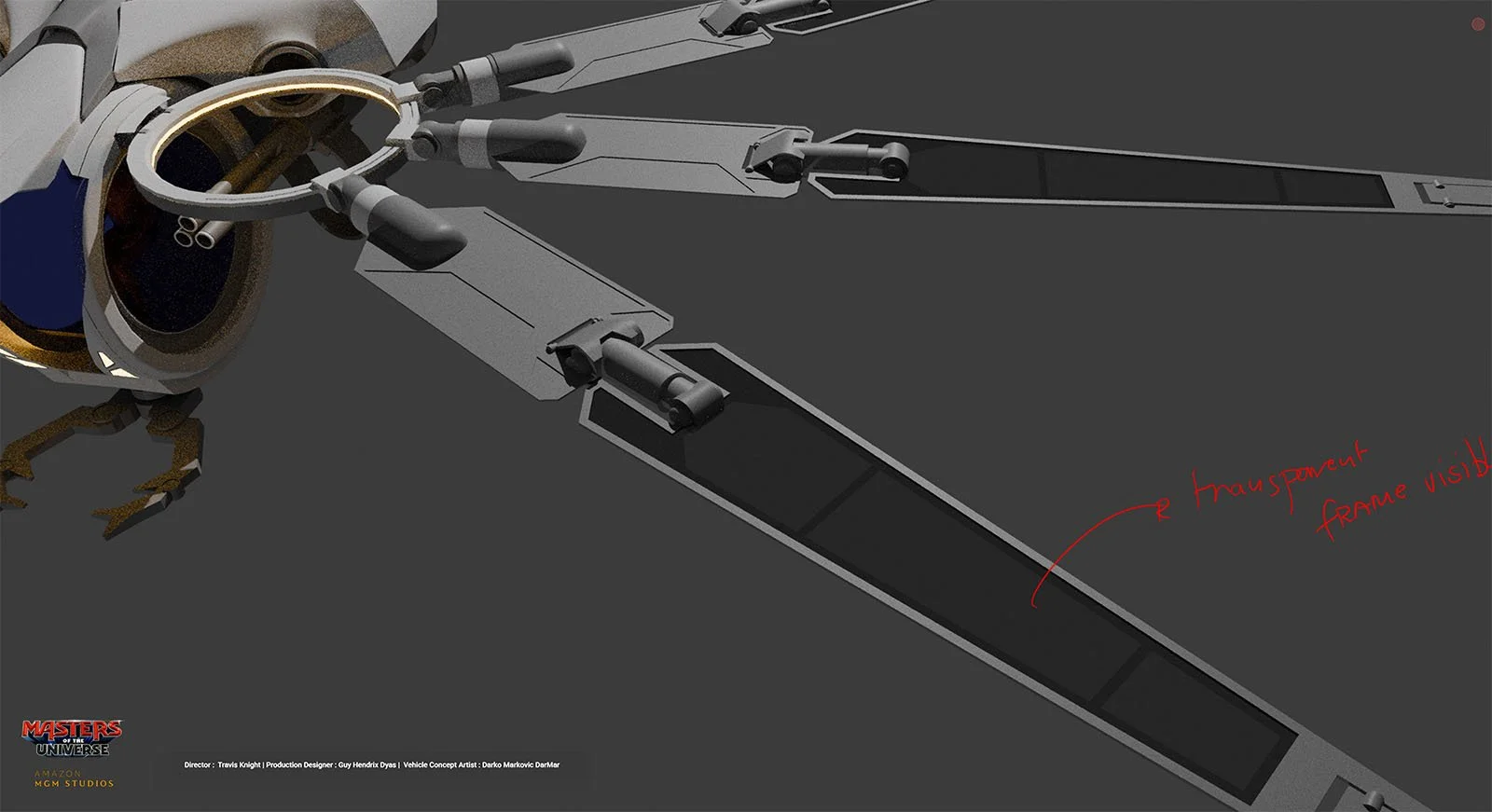
Each vehicle has a completely different style and mechanism, but the underlying design logic remains consistent: establish strong, readable surface volumes, introduce a distinctive mechanical system, and use the styling to lead the eye toward that mechanism so the viewer wants to explore how it works. The way the vehicle lands immediately differentiates it from the others. Using its flying wings as landing legs was something I hadn’t seen done before, and I knew it fit perfectly within the universe of Masters of the Universe.
The movie needed to retain that sense of something unexpected and never-seen-before, but grounded in believable, functional design. That’s where my industrial and automotive design approach came into play — turning an unusual idea into a mechanism that could actually make sense as part of the vehicle.
The Production Designer responded particularly well to one of the directions, so we pushed that version forward. I was then asked to incorporate the forward arms/pincers from the original design, which became another opportunity to integrate the recognizable element into the new, more functional design language.
DESIGN BREATHING ANIMATIONS
3 min video
When the Production Designer discussed the options with the Director and they chose the version where the wings also functioned as landing legs, I was asked to develop the idea further.
I explored different wing configurations and cockpit openings, but as the design evolved, I realized there was a huge opportunity to introduce a dedicated landing engine that could become a visually striking element in the film.
I explored that direction as well. I know this type of workflow is not common for everyone, but for me, animation of function is an integral part of the design process. It allows everyone in the studio to immediately understand not only where the design is going, but how it will move and function on screen. It also gives the team an immediate opportunity to expand the imagination and creative possibilities of the vehicle.
After all, for me, vehicles are living “beings.” They need to show how they move, transform, function — how they breathe.
It also gave the Production Designer something tangible to present to the Director — not just a static drawing, but a living design that showed how the vehicle could move, transform, and behave on screen.
Seeing vehicle movie before movie
Both the Director and Production Designer liked the direction. The form, function, mechanism, and basic proportions were there. They wanted to further optimize the rear landing engine I had introduced and explore a few new variations.
They also realized that I could produce animation while designing, which opened up another layer of the process. I was asked to present the vehicle almost like a scene — flying through an environment — so the team could see how the design would actually behave on screen. I did that, and we decided to develop this approach across all the vehicles.
At this point, the design was ready to be polished. I had essentially established the entire package, much like preparing a car for final styling: the proportions, mechanisms, cockpit, openings, and functional architecture were all resolved.
Now it was time to really design the shapes.
They had to be Masters of the universe shapes, combined with logic.
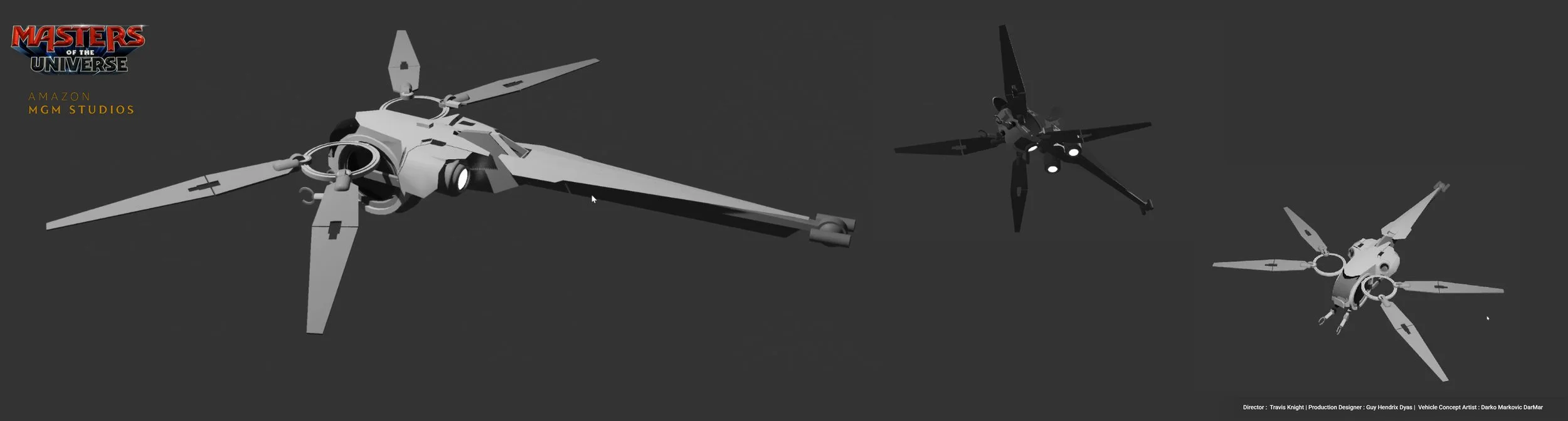
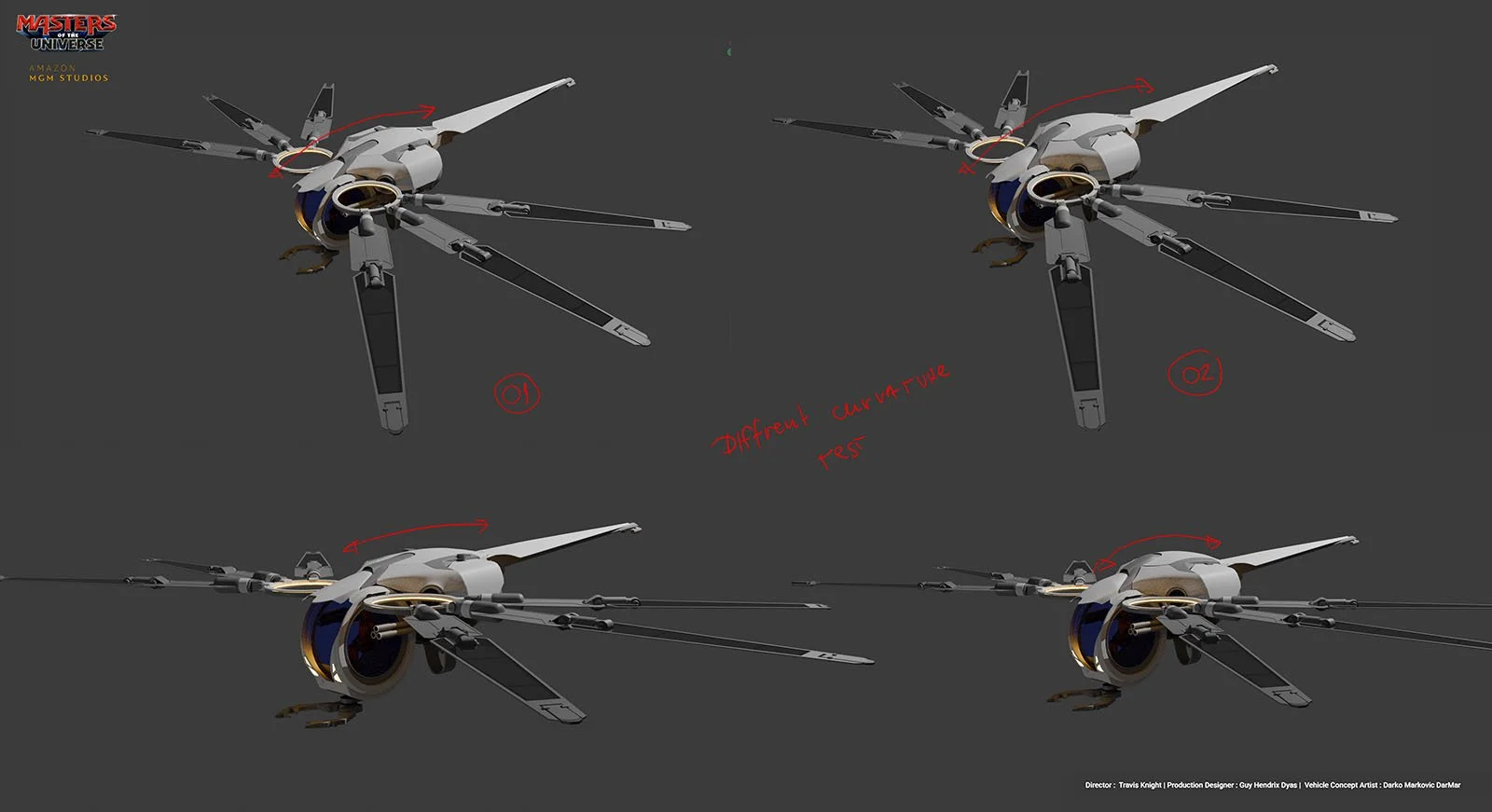
DESIGN DETAILS AND SURFACING
The Director was very happy with the direction, and the Production Designer wanted to push the vehicle’s surfacing a little further, giving it a more aggressive and “dangerous” character.
I explored different curvature and surface transitions while maintaining everything we had already established. I also introduced a few additional details, including landing legs to provide better support when the vehicle was on the ground, and a transparent element that subtly referenced the look of a dragonfly.
The goal was to add character without losing the functional logic and design language we had already built.
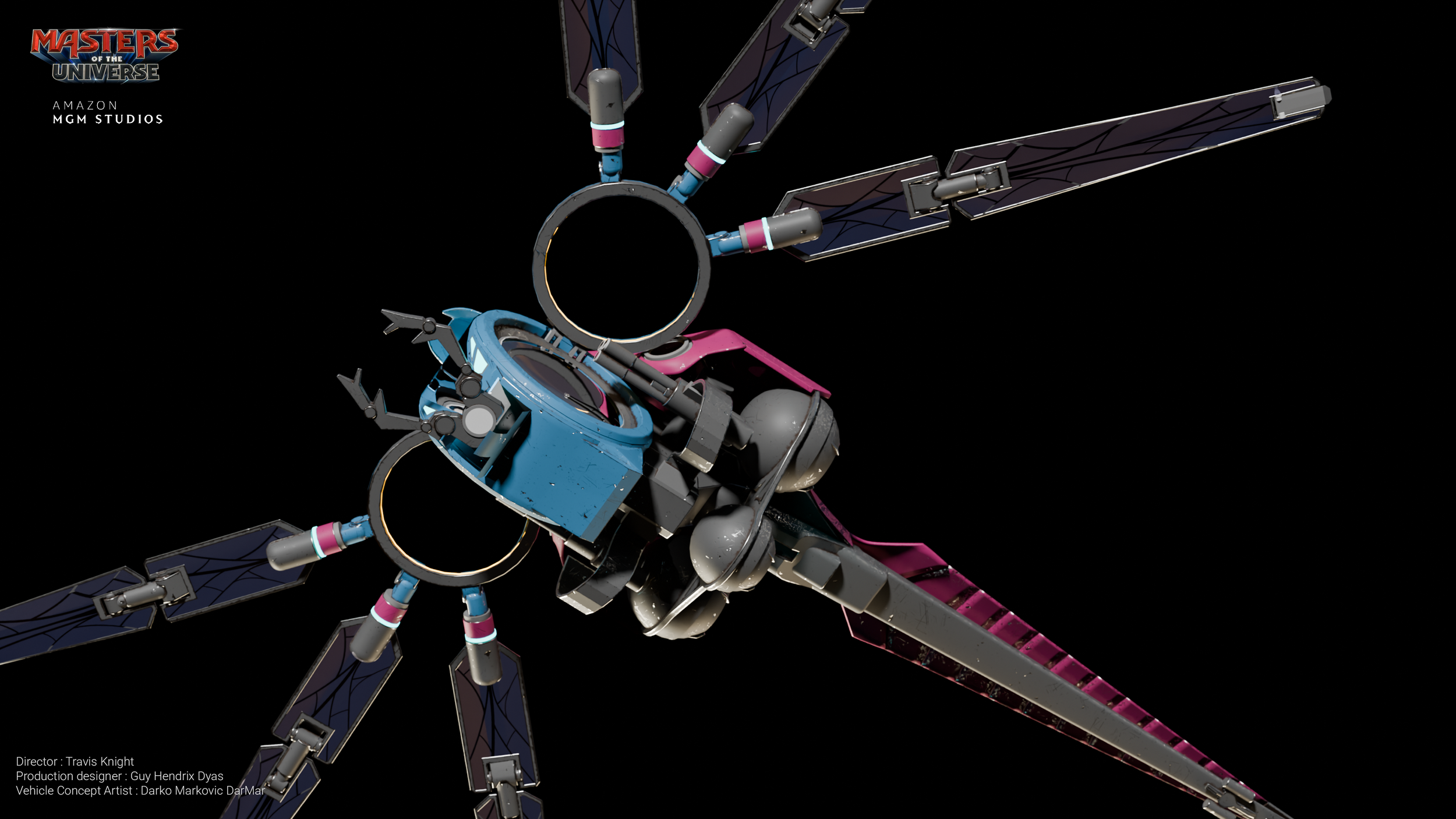
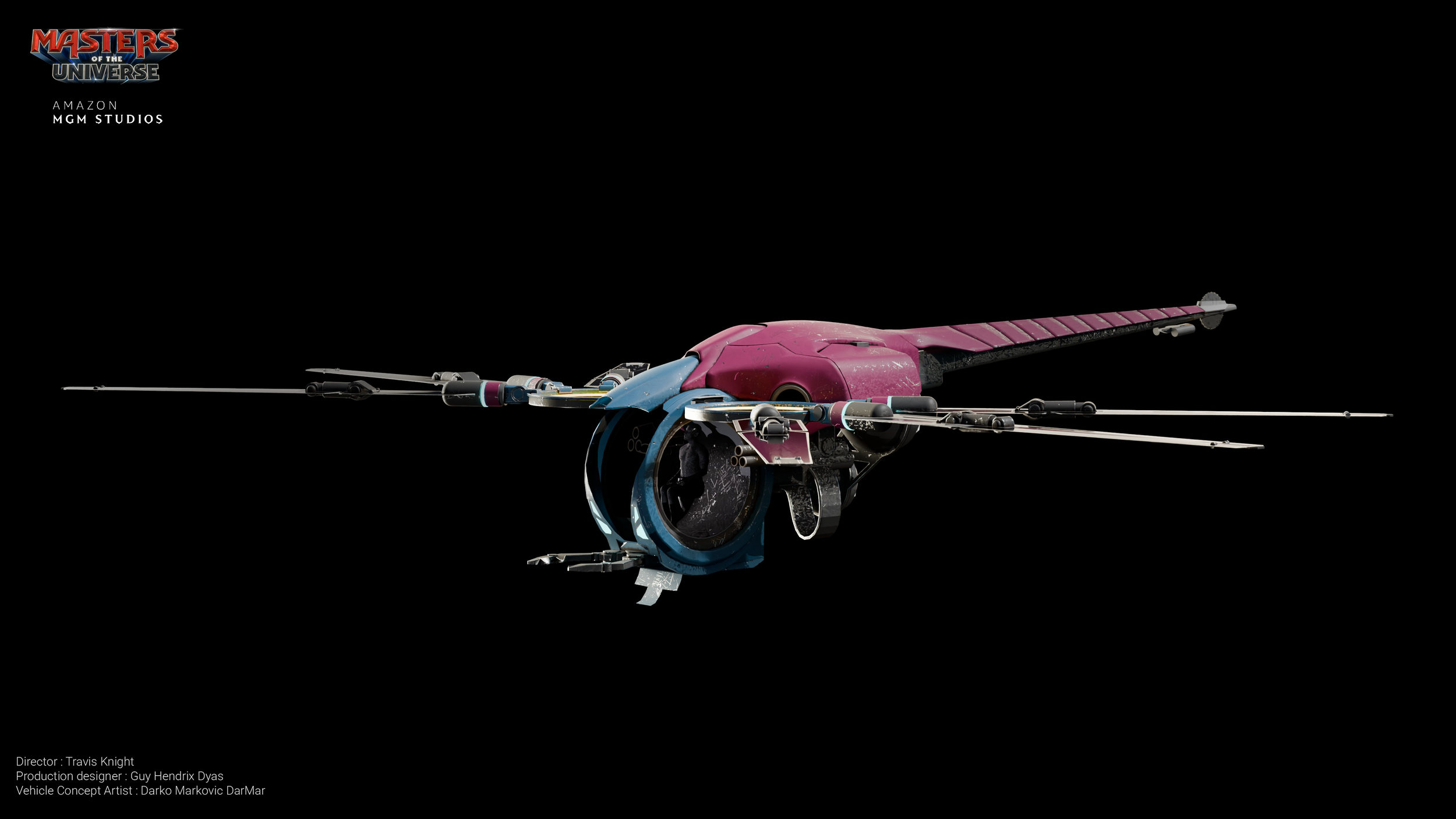
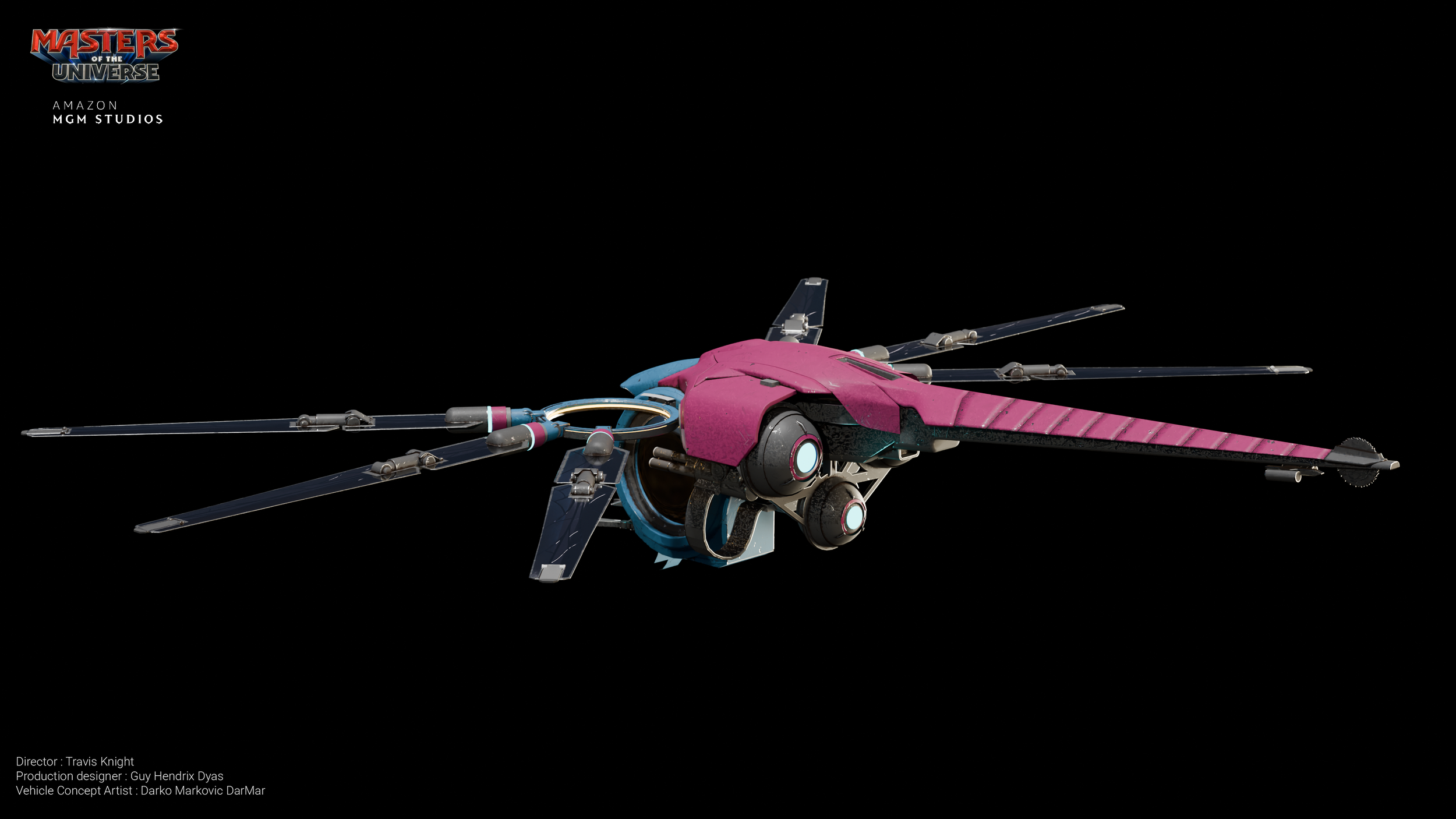
FINAL DESIGN
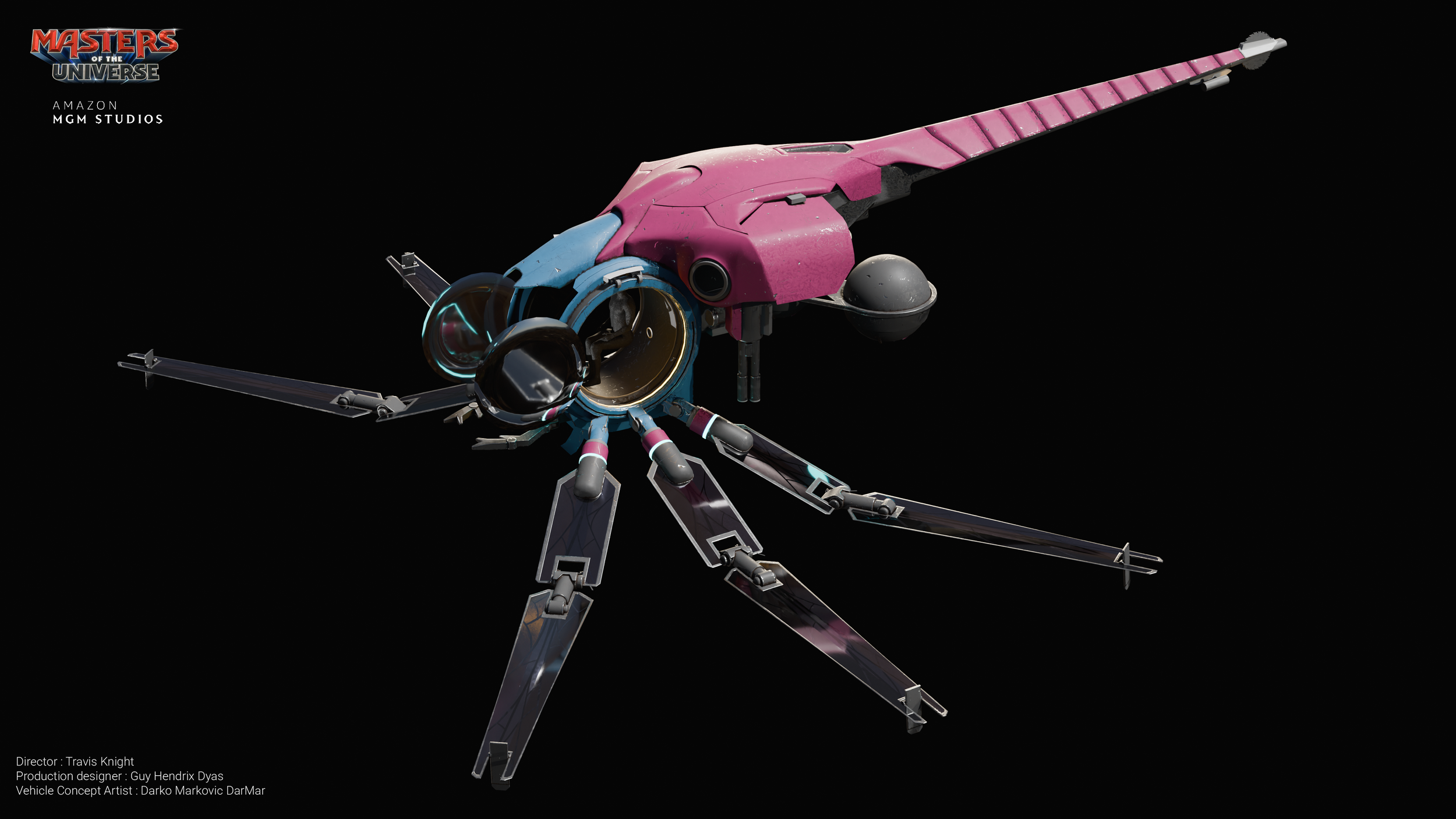
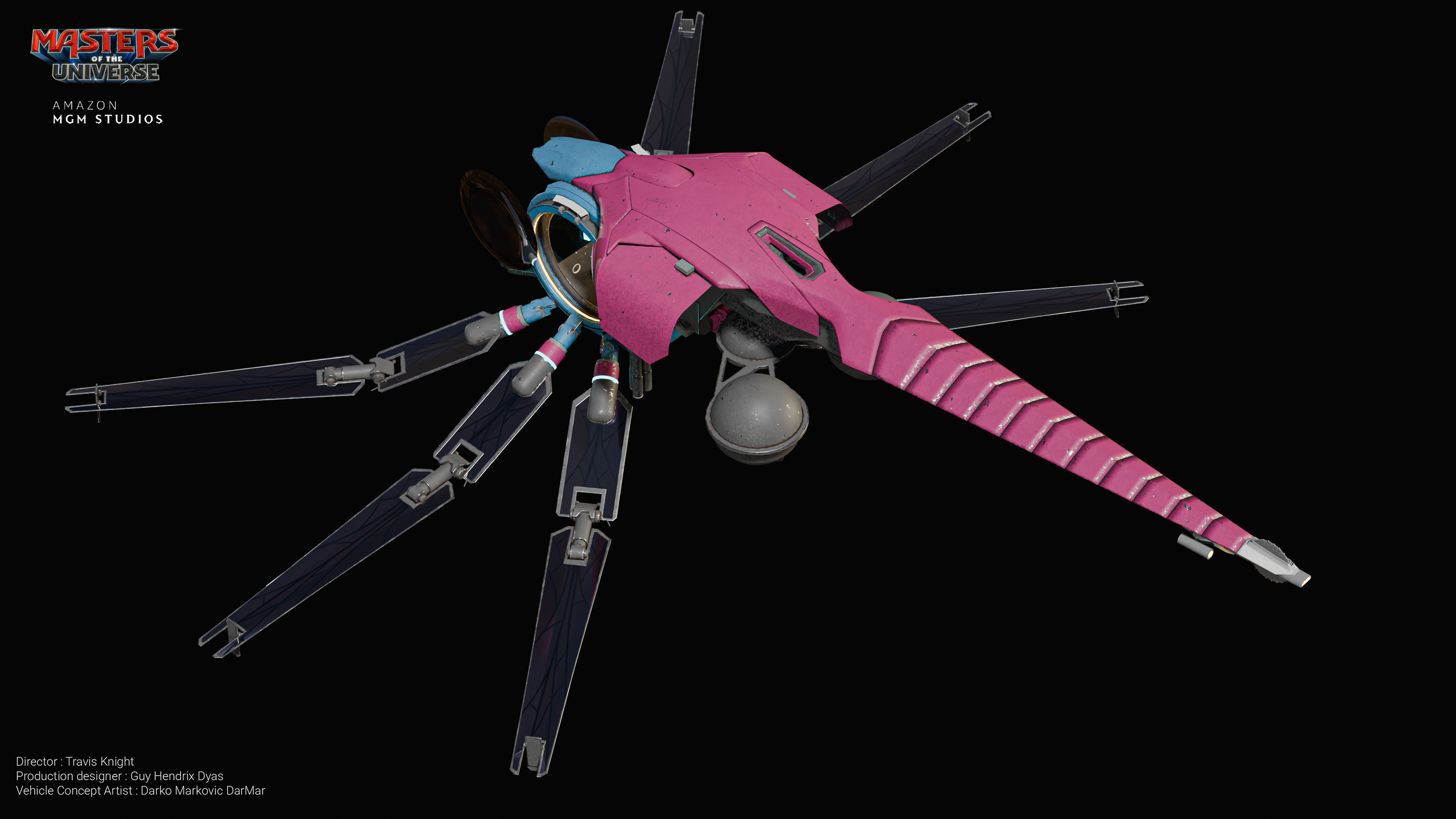
The final design was delivered as a fully functional vehicle concept designed in 3D with enough mechanical and structural logic that it could be translated from my design into a physical build and ultimately into VFX.
Unfortunately, because of the extremely fast production schedule, these final presentation images were created afterward as an additional step. The actual design work had already been completed and delivered to production.