DESIGNING TEELA SPACESHIP (TALON FIGHTER) FROM MASTERS OF THE UNIVERSE 2026 (CASE STUDY)
Part 2 of the vehicle designs I created for Travis Knight’s Masters of the Universe (2026).
If you missed Part 1, where I broke down the development of the Fright Fighter, you can check it out here.
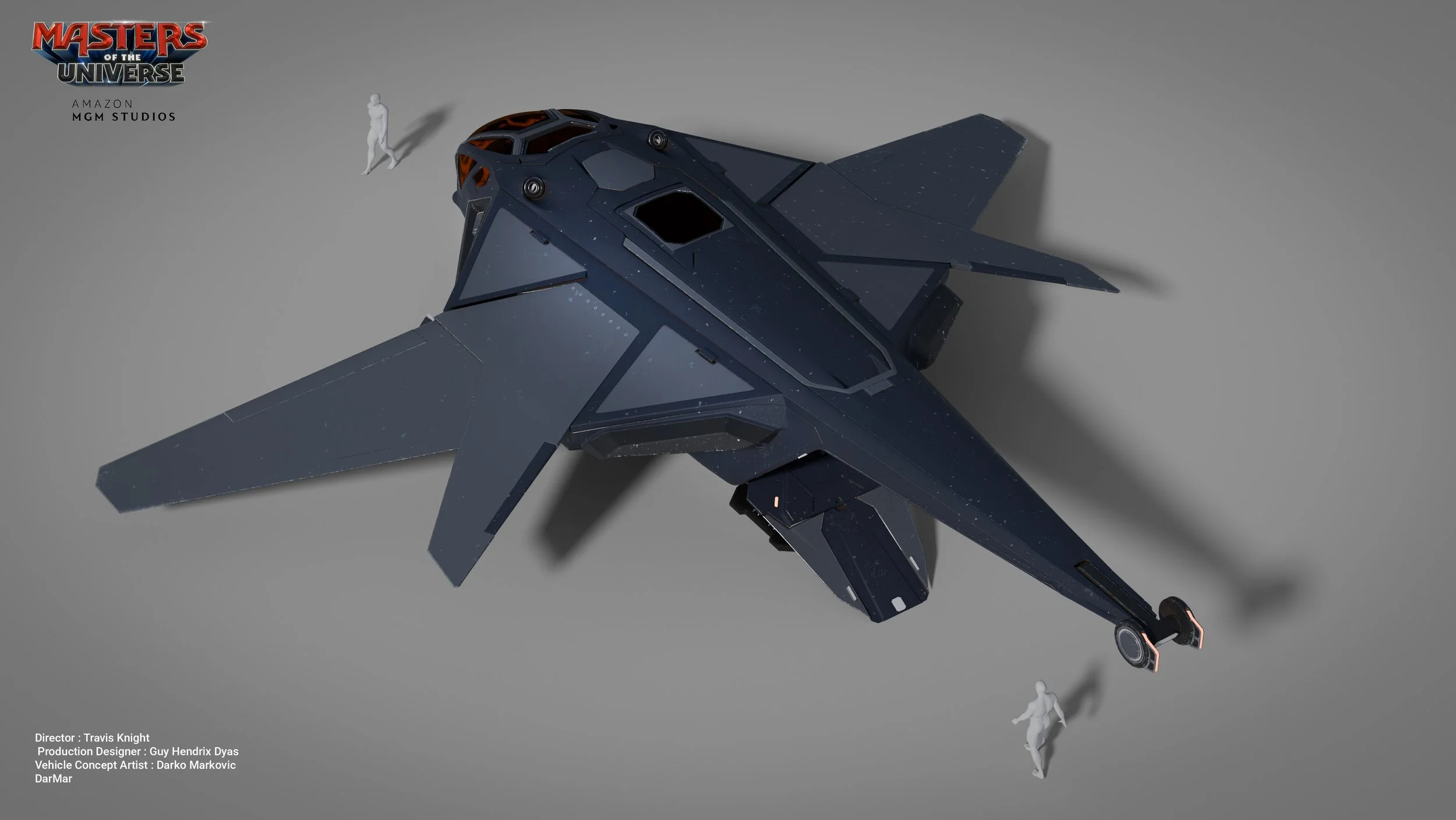
For this project, I had the great honour of designing Teela (Talon Fighter) spaceship for Amazon’s new Masters of the Universe movie.
The goal was to create something that felt new and futuristic while still belonging to the visual world of MOTU — combining strong silhouettes, functional design logic, mechanisms and cinematic presence.
Property of Mattel and Amazon MGM Studios.
DIRECTOR : TRAVIS KNIGHT
Production designer : Guy Hendrix Dyas
Lead vehicle concept artist : Darko Markovic DarMar
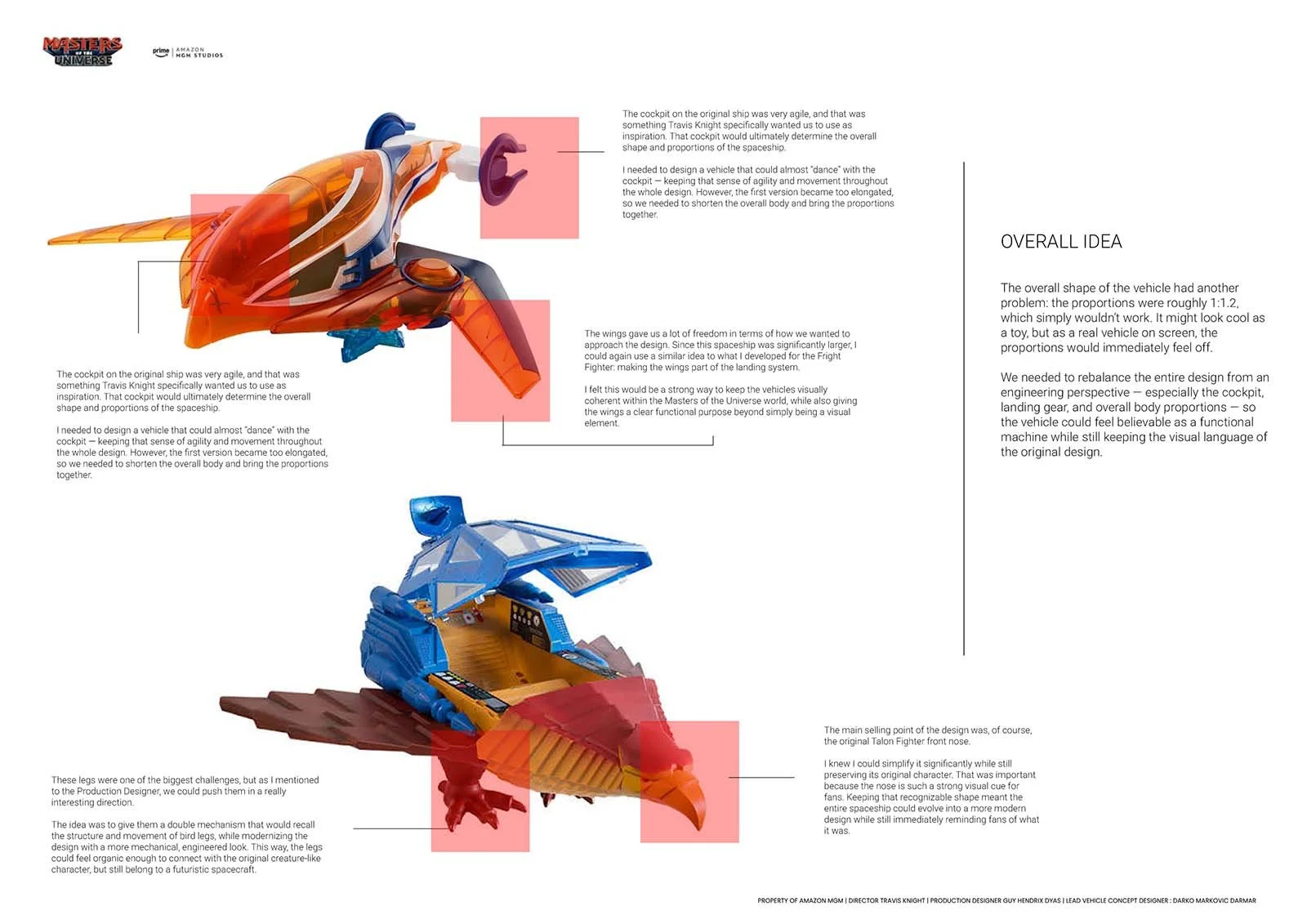
MIND MAP OF TALON FIGHTER
The overall shape of the vehicle had another problem: the proportions were roughly 1:1.2, which simply wouldn’t work. It might look cool as a toy, but as a real vehicle on screen, the proportions would immediately feel off.
We needed to rebalance the entire design from an engineering perspective especially the cockpit, landing gear, and overall body proportions — so the vehicle could feel believable as a functional machine while still keeping the visual language of the original design.
The first pass of the design explored shape, function, imagination, and animation at the same time, so both the Production Designer and Director could clearly see where the vehicle was heading.
Because this was a larger vehicle, I had more freedom to explore different wing configurations. Once the overall proportions were solved, I could push the spaceship into several very different visual directions without losing its core identity.
The wings followed the Masters of the Universe approach to engineering — not necessarily strict real-world engineering, but believable movie engineering. They needed to feel like they could actually operate, transform, land, and support the vehicle within the logic of the film.
That balance between believable function and imagination opened up a much wider design space and allowed us to create a vehicle that felt unique to the world of Masters of the Universe.
INITIAL DESIGN
Not just static design, but animated one
The Production Designer immediately liked the version with the nose that referenced the bird. It was simplified as I had planned, but I also realized that the wings couldn’t extend only forward — I needed a rear wing to support the overall design and balance.
By this stage, I had gained enough trust in the design process to move more freely between shape, function, and animation. I also had more time to explore different solutions and push the design further.
I was asked to create animations as well, and was shown storyboards illustrating how the vehicle would appear on screen. This allowed me to present the design immediately in context, showing not only what it looked like, but how it could function and move within the scene.
The result was a much stronger design — one that worked as a shape, a functional vehicle, and an on-screen object.
Simple styling impact
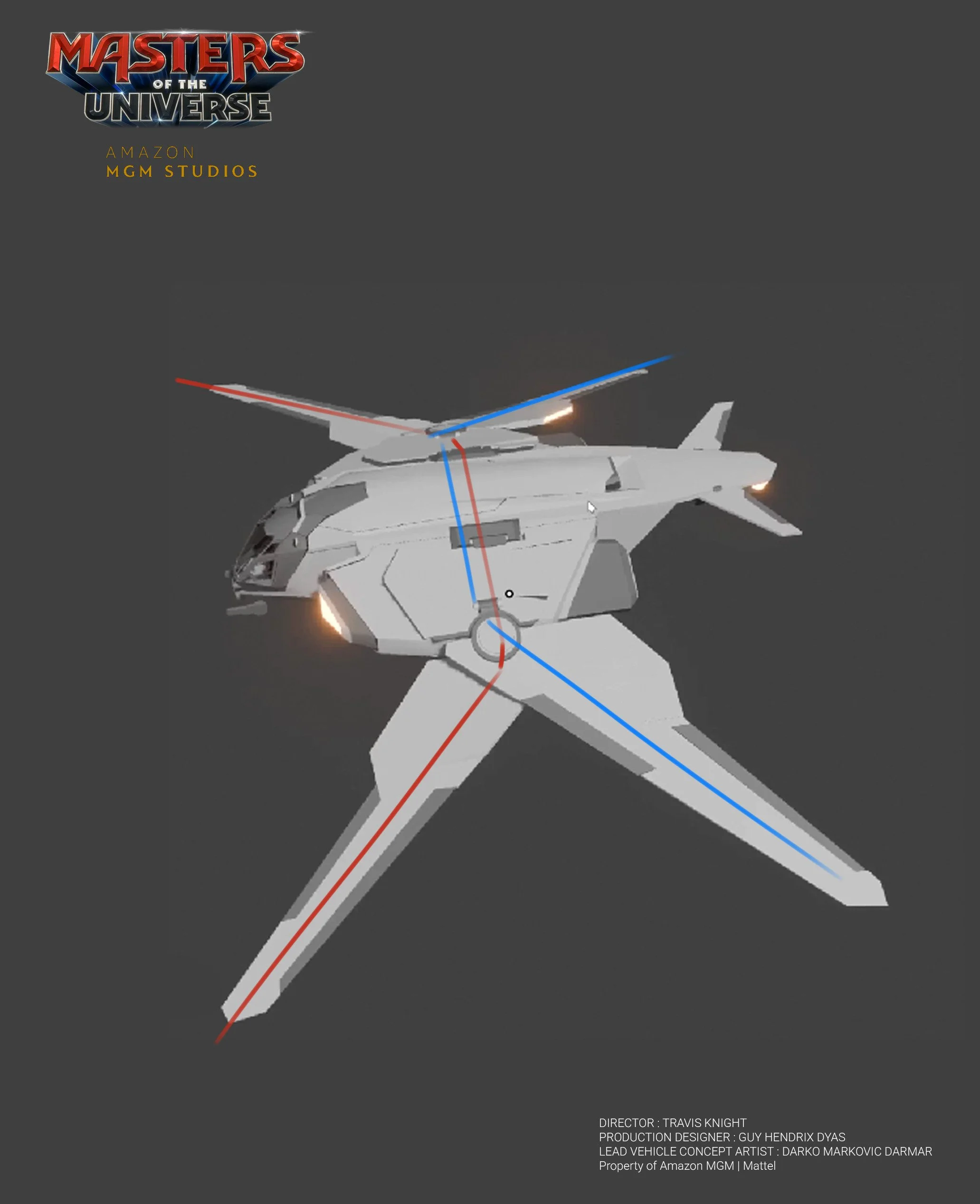
When discussing the design with the Production Designer, I explained that a front wing alone wouldn’t work for this vehicle. It created an imbalance in the silhouette, so I introduced a rear wing to counterbalance the overall shape.
The rear wing helped guide the eye naturally across the vehicle’s lines, creating a stronger sense of visual stability and making the proportions feel more grounded. It also referenced the silhouette of a traditional aircraft wing, giving the vehicle a subtle connection to familiar aviation design without making it feel too conventional.
Most importantly, the rear wing supported the vehicle’s functionality. It didn’t interfere with the design language or overcomplicate the silhouette, meaning that when the vehicle lands on Earth, it still feels believable and functional within the film’s world.
Shaping style
The design was moving forward, and the functional side was starting to come together. The landing gear, mechanisms, and other elements followed the kind of real-world logic I wanted the vehicle to have.
With the basic functionality established, it was time to push the design further. I could now focus more on the overall proportions, shape language, surface development, and distinctive details — making the vehicle feel more unique while still maintaining a believable engineering logic.
At this stage, the goal was not simply to make the vehicle look more futuristic. Every design decision had to support the way the vehicle would operate, move, land, and ultimately exist on screen. Function was driving the form, while the form was becoming increasingly specific to the world of the film.
DOOR OPENING AND DESIGN
The design was moving in a great direction. With the main proportions and functional elements established, I could finally start introducing smaller shapes and details, while refining the overall flow of the vehicle.
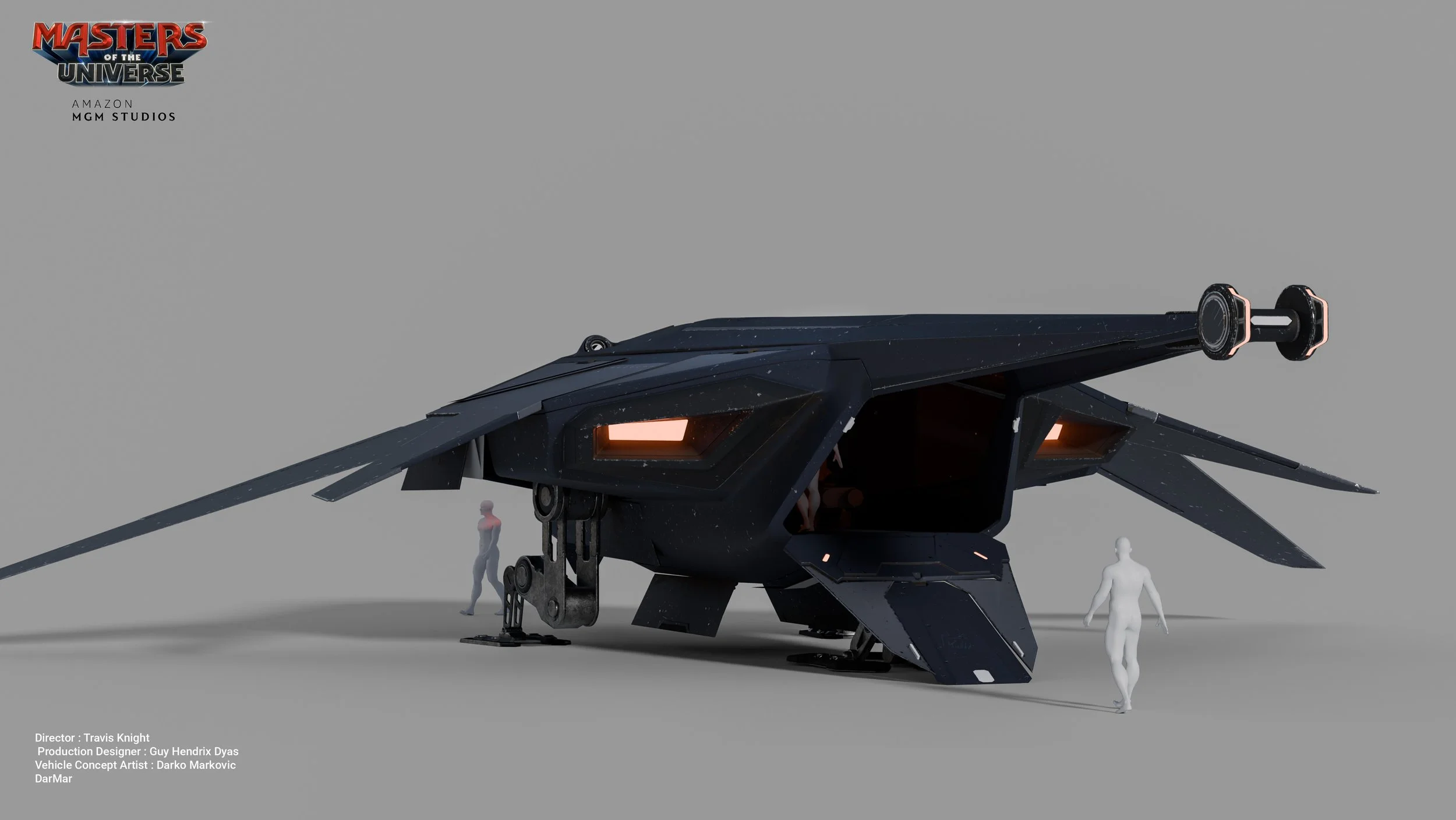
We also explored the rear door, which became an important functional element in the film. If you’ve seen the movie, you’ll know that this opening was essential for allowing the Sky Sled to deploy from the vehicle.
As these elements came together, the vehicle started to feel more agile and dynamic. The proportions were working better, the silhouette had more movement, and the smaller design decisions were beginning to give the vehicle its own character while still maintaining the functional logic established earlier.
Concept design > mobility/industrial design
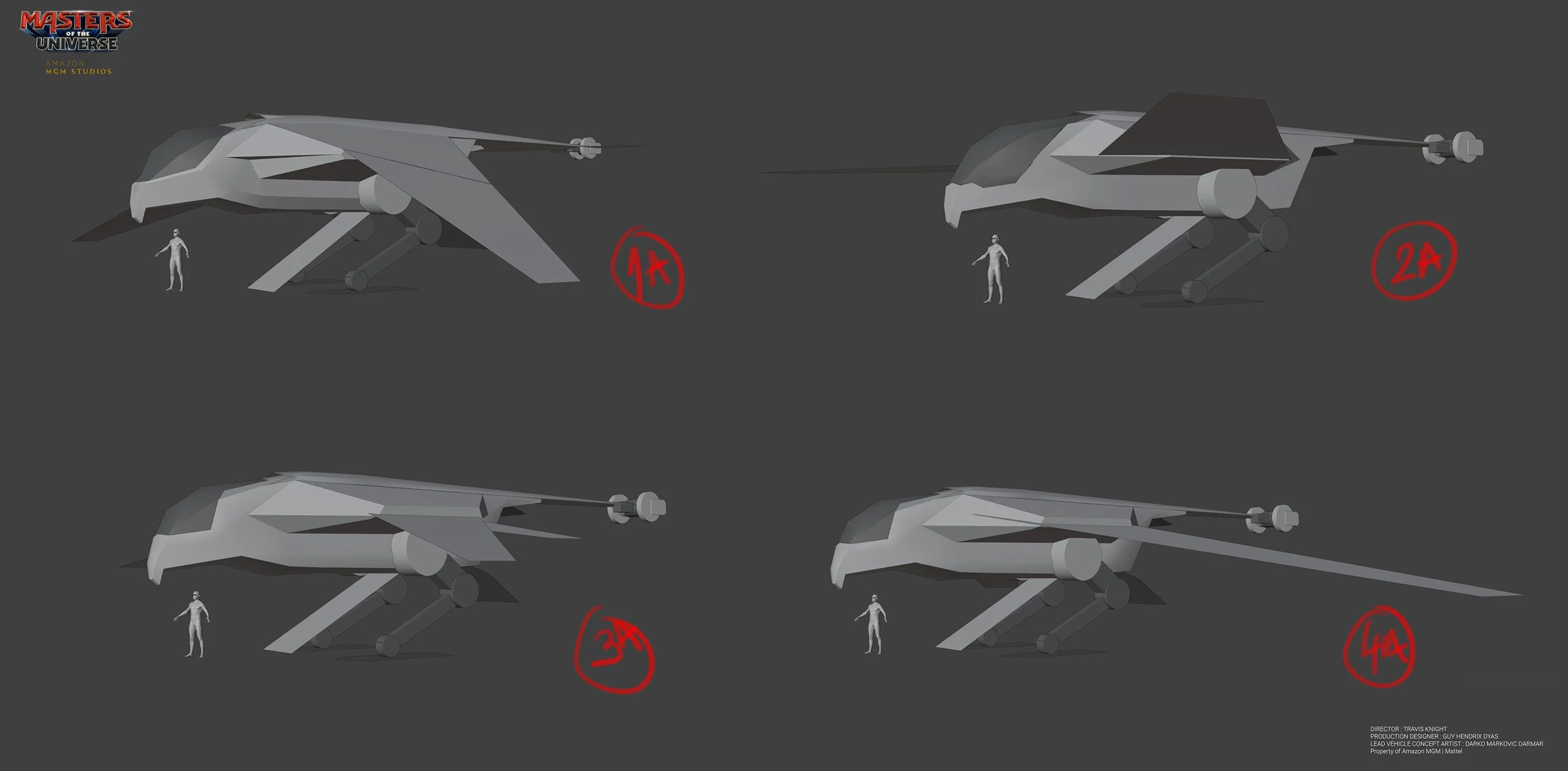
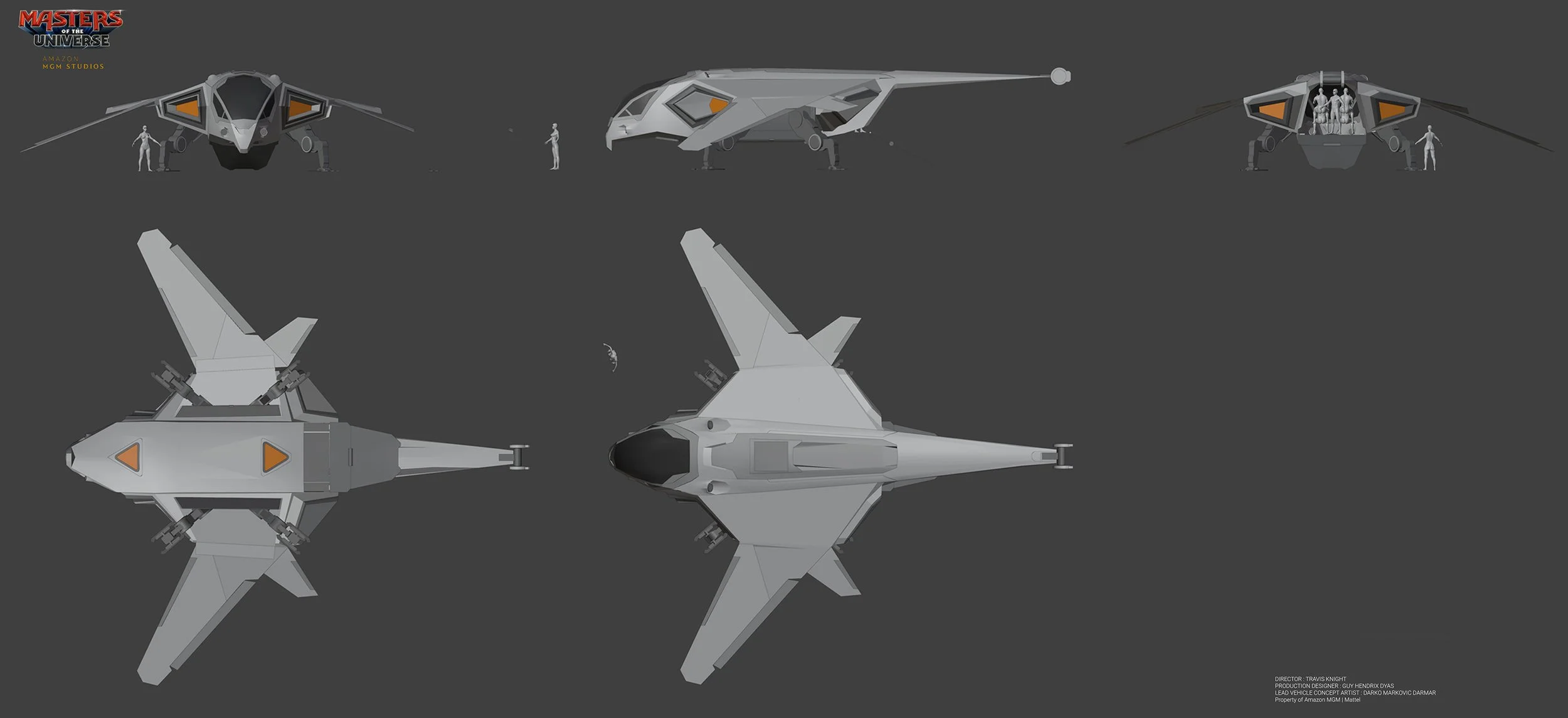
The director wanted a smaller vehicle, which unfortunately meant the wings had to move downward. This reduced the overall package and, almost immediately, turned the problem into something closer to a car-design and industrial-design exercise.
I knew how to approach that kind of constraint, so we started restructuring the vehicle around the new proportions. The overall package had to become smaller while still accommodating the Sky Sled and four drivers.
But I knew the legs would become the biggest challenge. With the reduced package, they suddenly dictated much more of the vehicle’s overall proportion and made the design feel almost 1:1 in scale. I knew I would eventually have to trim them down and improve their aerodynamic integration, while still preserving the visual reference of a Talon fighter.
PACKAGE CHANGE
The Director and Production Designer discussed the vehicle further and decided to tighten the package even more. This created a new challenge: I had to balance imagination with engineering logic.
With extremely tight packages, it is easy to create something that works functionally but ends up looking awkward or over-complicated. I told them, “Don’t worry, I’ll solve it,” and started restructuring the vehicle around the new constraints.
I repositioned the landing-gear legs and redesigned the rear tail so they could work within the new cocoon around the multiple systems and components packed inside. The goal was not simply to make everything fit, but to restyle the entire vehicle so the tighter package still felt intentional and visually coherent.
That meant changing the body proportions, reshaping the rear volume, and carefully integrating the legs into the overall silhouette. Even with such a constrained package, I wanted the major masses and structural elements to maintain a sense of balance and proportion—the legs had to feel like they belonged to the vehicle rather than being something added afterwards.
LEGS MECHANISM AND NEW DIRECTION OF DESIGN
The legs proved to be the most challenging part of the vehicle. I had to engineer them not only to look good, but to function convincingly within an extremely tight package. So i removed 4 and put three like a tripod, which would leave me space in the wings and side for better styling. The available space was minimal, yet the vehicle had to accommodate the landing mechanism, multiple openings, and all the necessary moving parts.
I really enjoyed working within those constraints because it is very similar to how I approach industrial design: every millimeter has a purpose, and the design has to be developed around the available package rather than simply placed on top of it. I designed and 3D-modeled the vehicle around this incredibly compact architecture, constantly testing how the mechanisms, openings, and surfaces could work together.
My fast solving brain, where i think about proportion, shape, function and movement proved incredibly valuable on this project.
I knew that once we solved the packaging, the vehicle would look remarkable. I wish we had more time to push it even further, but even under a tight production schedule, this is the kind of design challenge I enjoy—finding a way to make the design work no matter how little space or time we have.
Engineering + Creativity Solved the Package
I solved the package, and both the Director and Production Designer loved the result. My design philosophy—that every millimeter matters—really paid off on this project. Every element was working together, from the proportions and mechanisms to the way the vehicle occupied its limited space.
At this point, we started testing how the vehicle would look in motion. As I’ve said before, I strongly believe a design needs to feel alive when it is demonstrated. A static image can show the shape, but it can’t fully communicate how a vehicle moves, opens, transforms, lands, or interacts with its environment. For this project, motion became an essential part of proving that the design actually worked.
Doors opening mechanism design
I started exploring the door mechanism, working within a very tight package where every millimeter mattered. The first challenge was figuring out where the doors could actually move without interfering with the wheels, bodywork, cockpit, or the surrounding mechanisms.
I tested different opening directions and pivot points, looking at how each solution affected access, the silhouette, and the overall shape of the vehicle. Instead of simply applying a conventional hinge, I used the available space to let the mechanism become part of the design.
Because this was a futuristic vehicle, we weren’t restricted to a standard automotive door opening. The engineering logic still had to make sense, but we had much more freedom to explore unusual movement — doors could lift, swing, rotate, or follow a more complex path if the package allowed it.
That combination of tight packaging, believable engineering, and imagination led to several different door solutions, each giving the vehicle a different character while still feeling like something that could actually function.
Pushing Engineering Beyond Reality
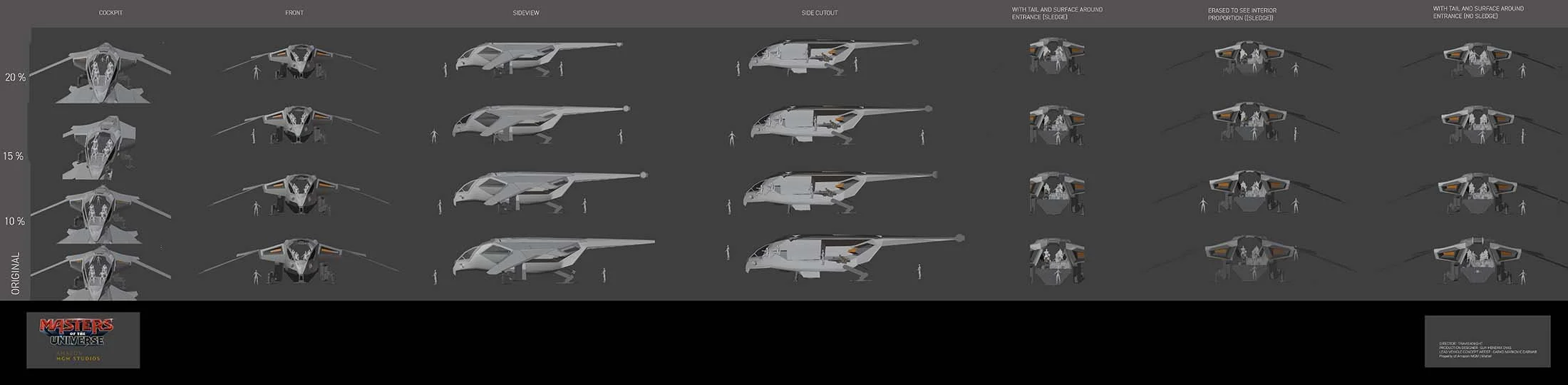
The Director wanted the package to be even smaller—essentially as compact as possible—because the shot required the spaceship to read at a much smaller scale.
I started testing different overall sizes, which naturally affected the engineering logic and internal packaging. What worked in our favor was that the core styling could remain consistent, even as the underlying structure changed.
One simple trick when designing vehicles like this is that adding an extra joint to a mechanism can dramatically expand what is possible. Thankfully, we had far more freedom than we would in real-world engineering, so we could explore those possibilities and use the mechanism itself as part of the design language.
MOVIE TIME
I continued testing different scenes for the vehicle, exploring how it would move and behave on screen. This process was great for all of them because the movie was essentially happening before the movie — we were designing not just how the vehicle looked, but how it would actually live and perform on screen.
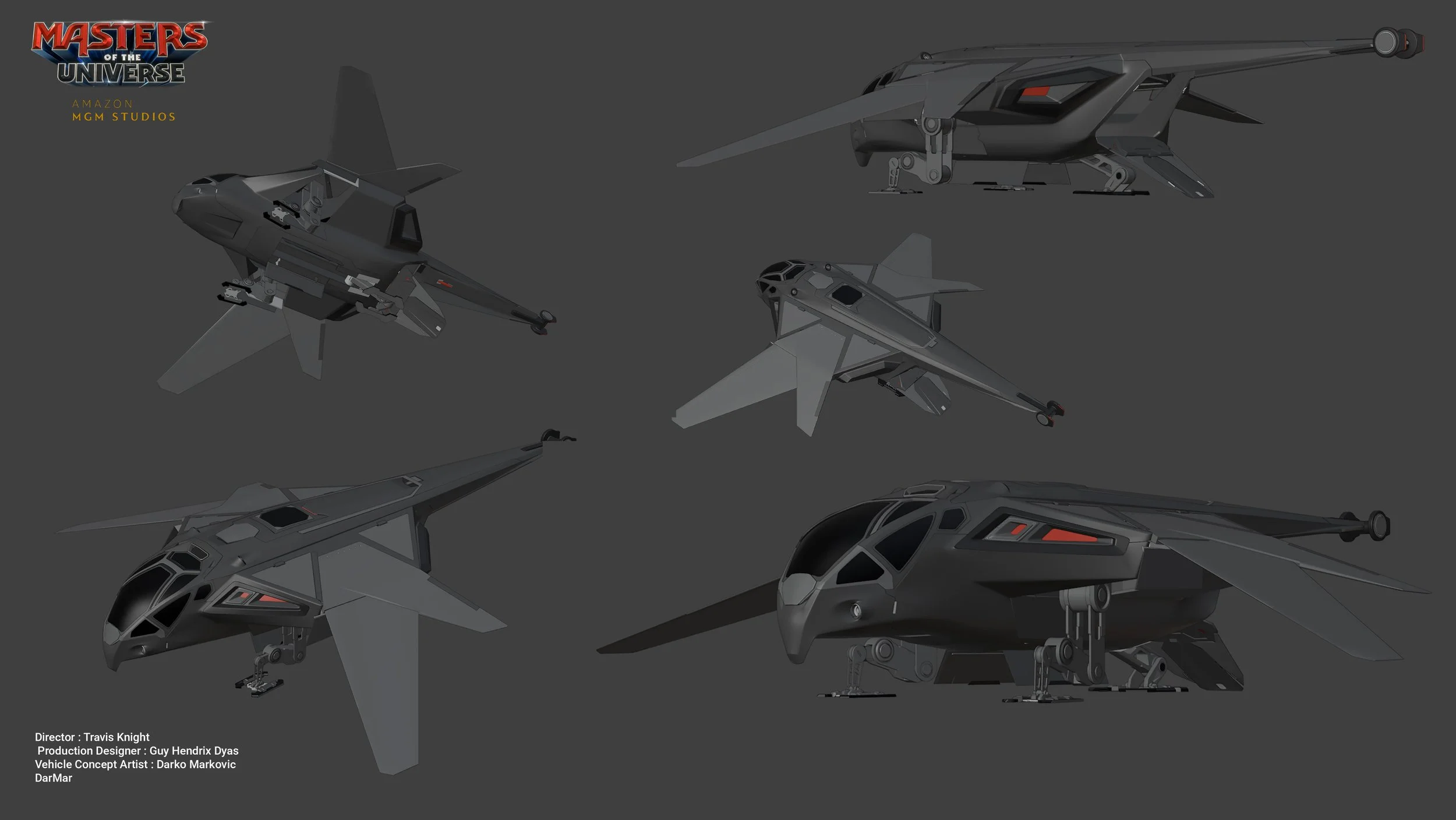
FINAL DESIGN
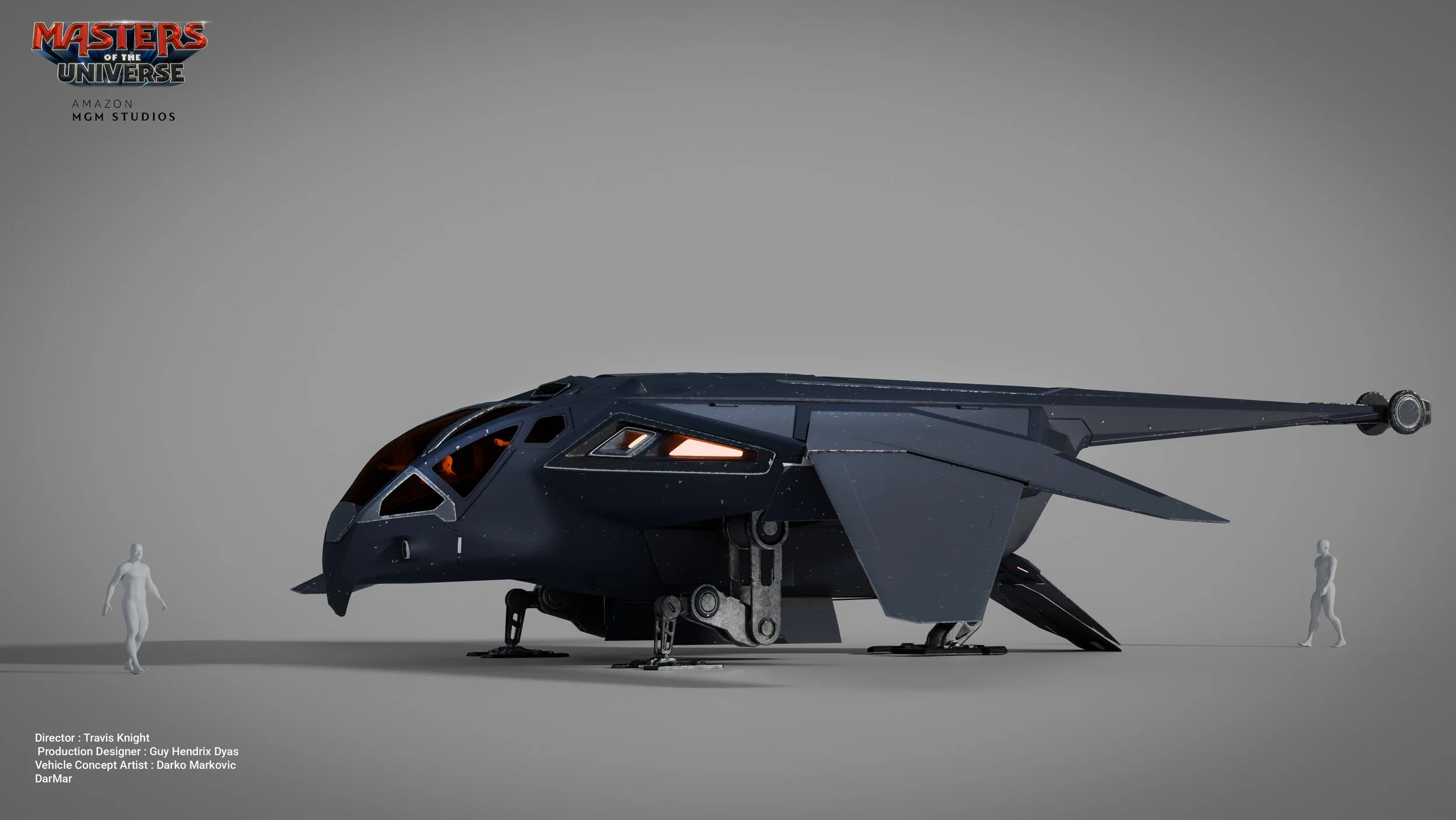
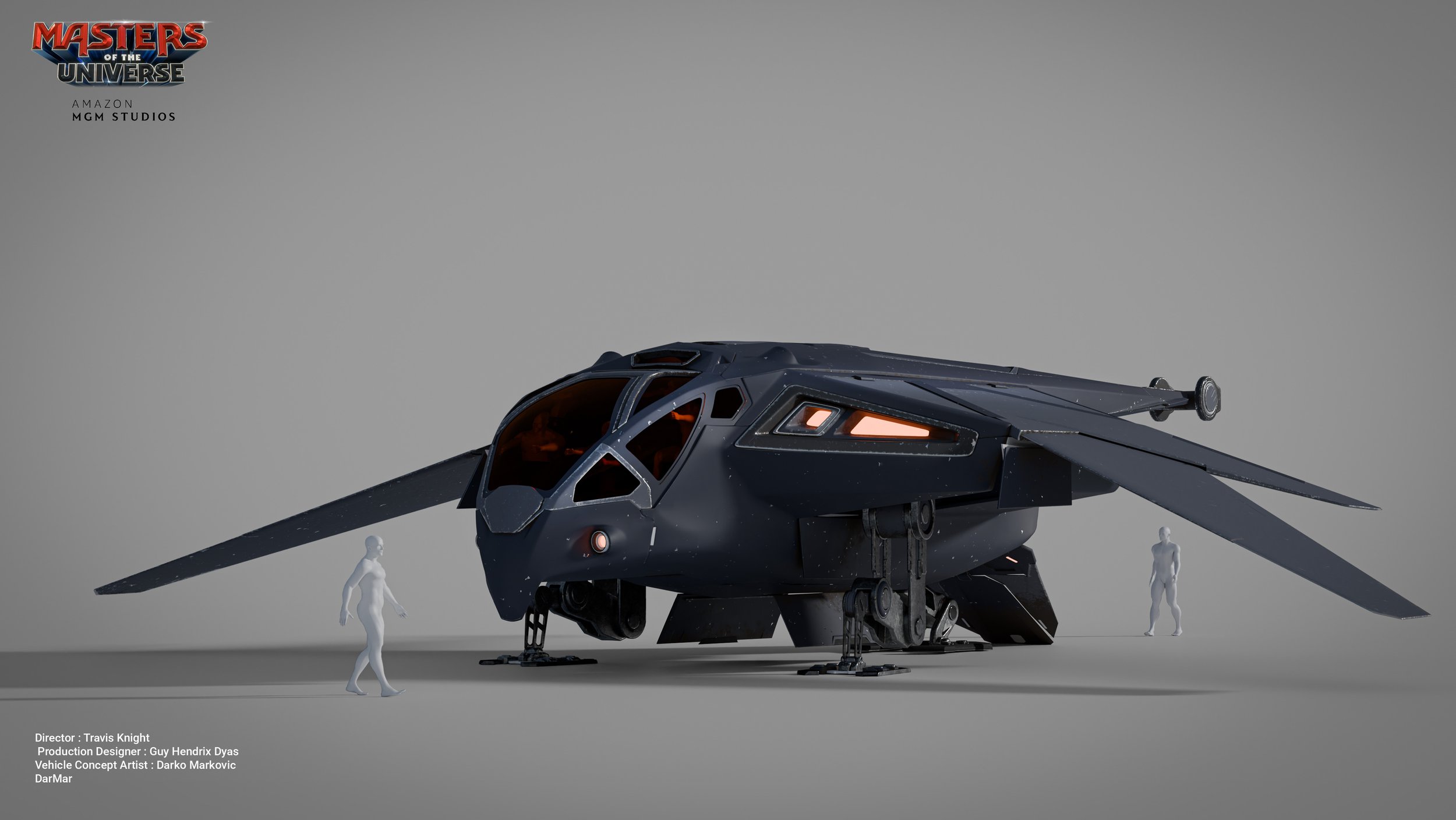
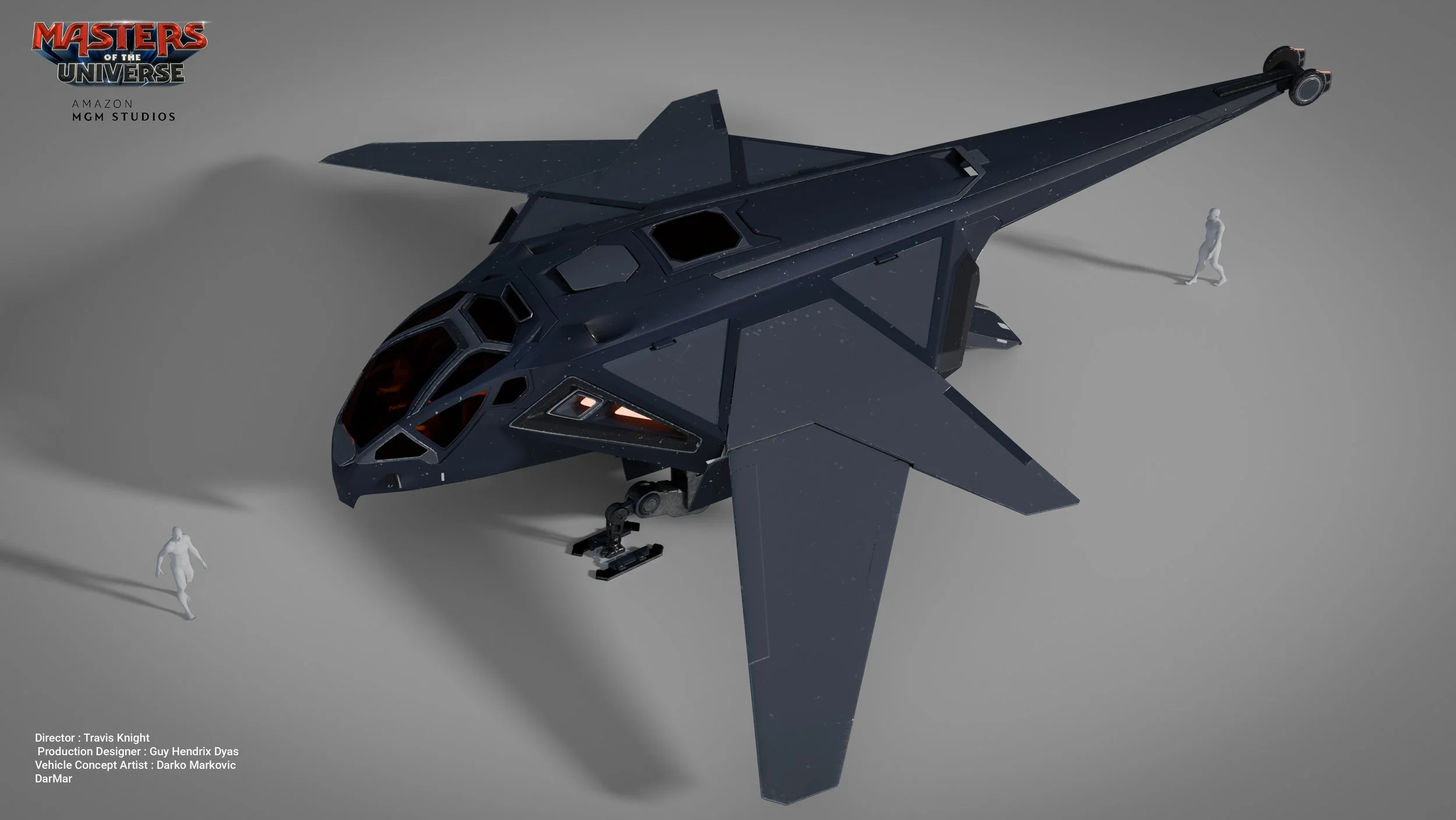
The final design was polished in Blender and prepared for production, then handed over to the VFX and prop teams as the basis for their work. The model communicated the vehicle’s proportions, mechanisms, openings, landing system, cockpit, and other functional details clearly enough for the teams to develop both the digital and physical versions of the vehicle.
Styling was fun part, because when you work so long on package and engineering this couple of days always pay of dramatically because human eye loves to see all the emotion went into something, and trust me a lot went in.
Aside from the wings, the vehicle was designed as a production-ready, real-world object. Its proportions, construction, mechanisms, and functional details were grounded enough that the physical production team could translate the design directly into a practical movie-set vehicle without having to reinterpret how it should work.
It was a beautifully engineered model, with the functions and moving parts resolved while still fitting everything into a compact package. At the same time, we managed to give the vehicle a strong visual identity and distinctive style. The final design was sharp, refined, and ready to move from concept development into production.
1:1 Vehicle PROP
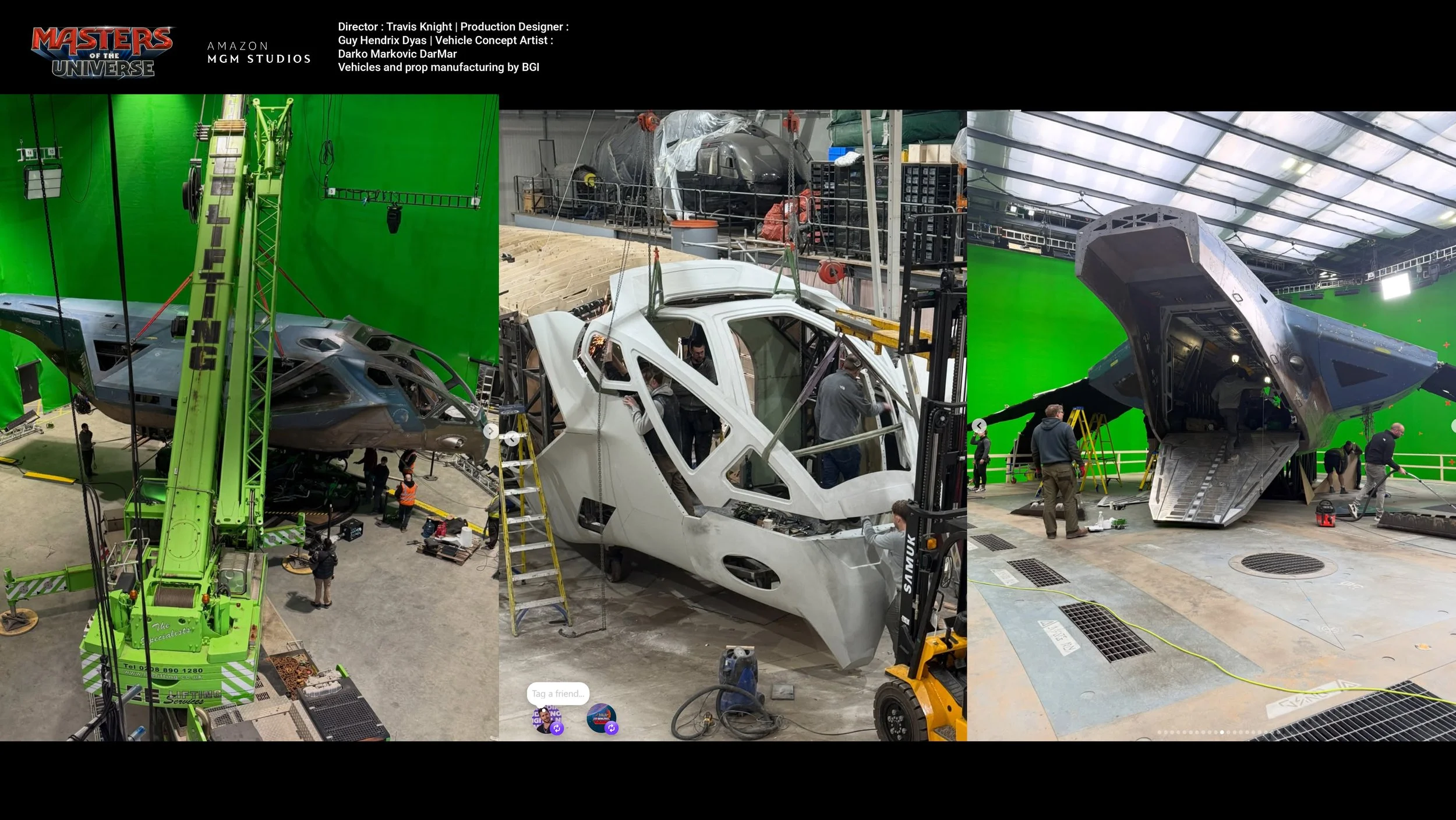
I wasn’t directly involved in the physical production of the 1:1 vehicle, which was built by BGI Supplies Ltd. They did remarkable work!
Seeing the Teela Spaceship brought to full scale was incredibly emotional for me. It was the first design I had ever worked on for a major big-screen blockbuster, and seeing it physically realized looked almost exactly as I had imagined it when I designed it.
Unfortunately, I was working remotely and never had the opportunity to see the vehicle in person. The Production Designer led the physical realization of the vehicle and communicated incredibly well with the BGI team throughout the process. Seeing the final result made me extremely proud of what we had created together.