NASA Space Exploration Drone
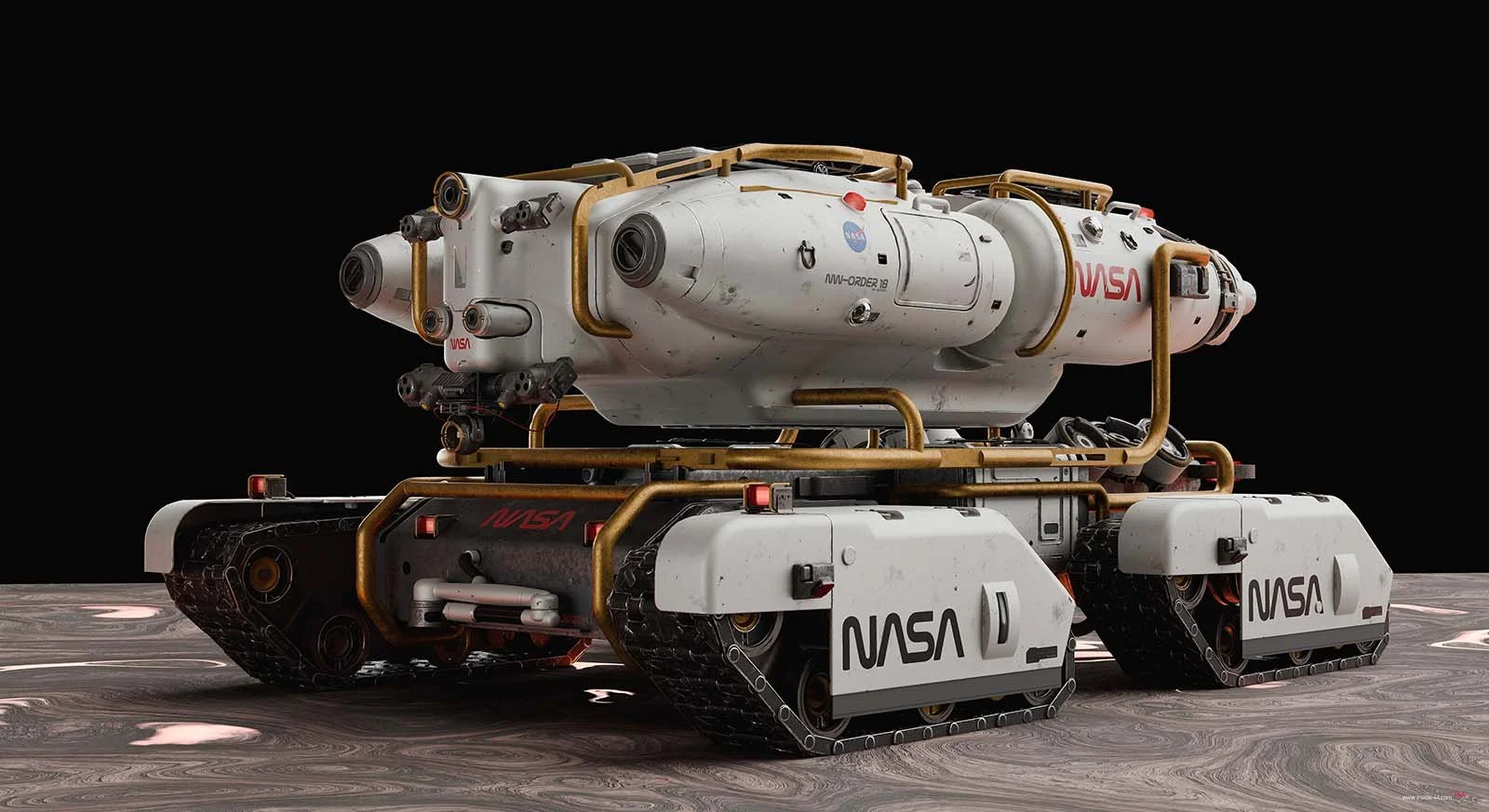
The NASA Space Exploration Drone is a modular autonomous vehicle concept developed for planetary exploration and long-term human habitation research.
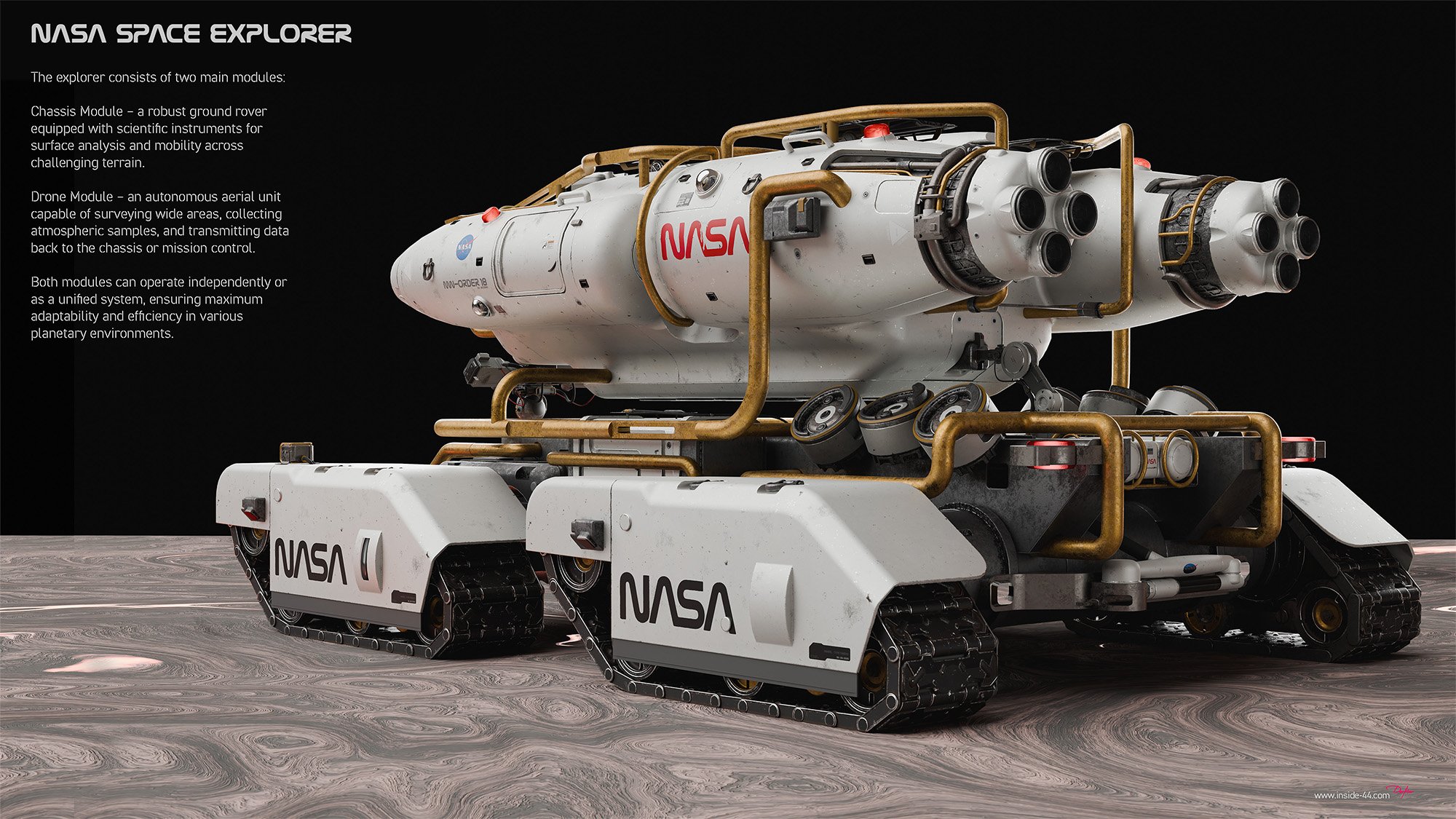
The system consists of two interoperable modules that can function as a unified platform or as independent units, depending on mission requirements.
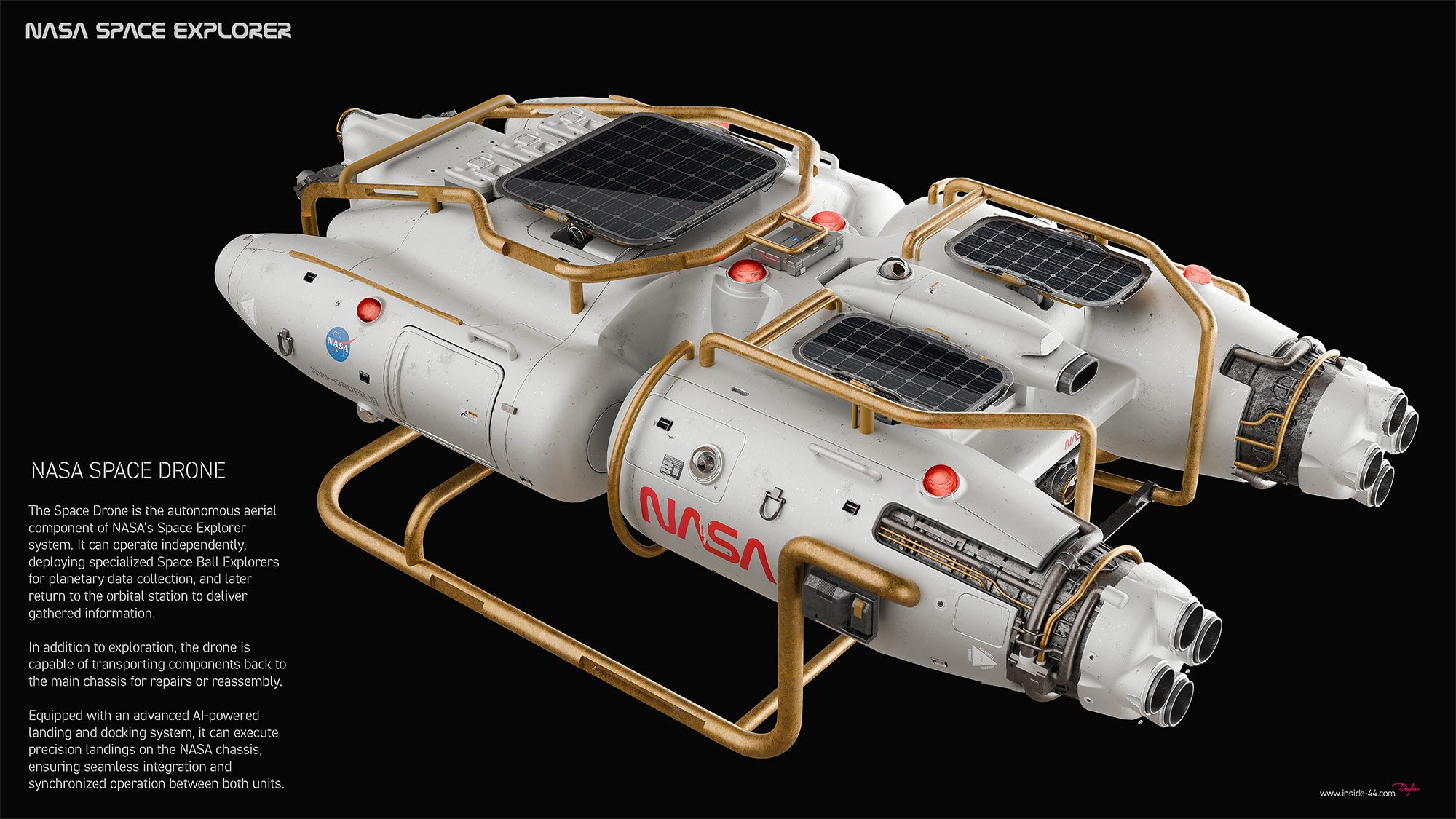
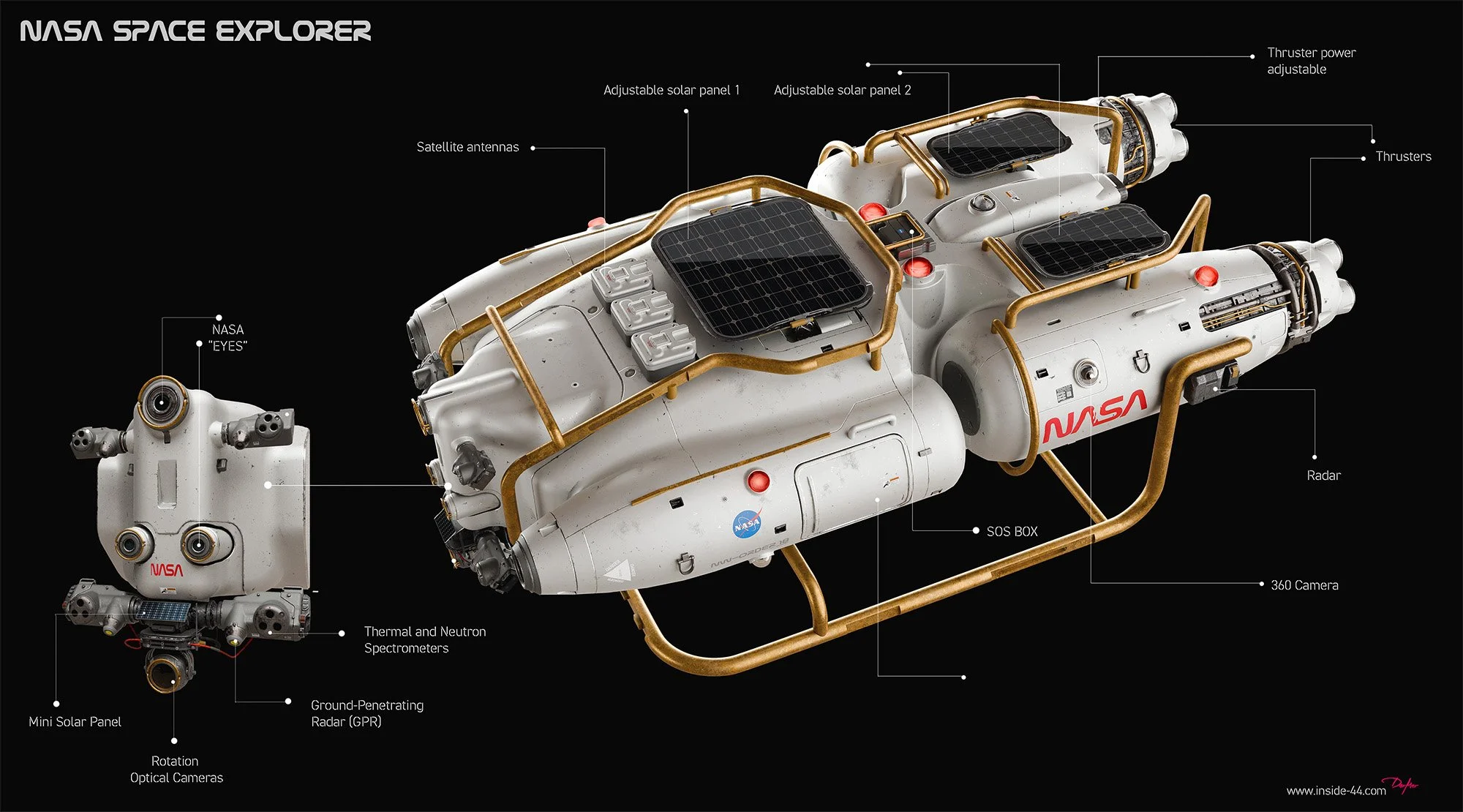
Drone Module
A flight-capable unit designed for transport, reconnaissance, and data delivery. It can carry the chassis module or operate independently, deploying exploration spheres to scan terrain and large surface areas. The drone is capable of autonomous return to a space station to transfer collected data.
Chassis Module
When operating independently, the chassis deploys a large solar array for rapid energy harvesting. It is equipped with terrain analysis and debris-collection systems, gathering critical environmental data while supporting extended exploration missions.
Exploration Phase
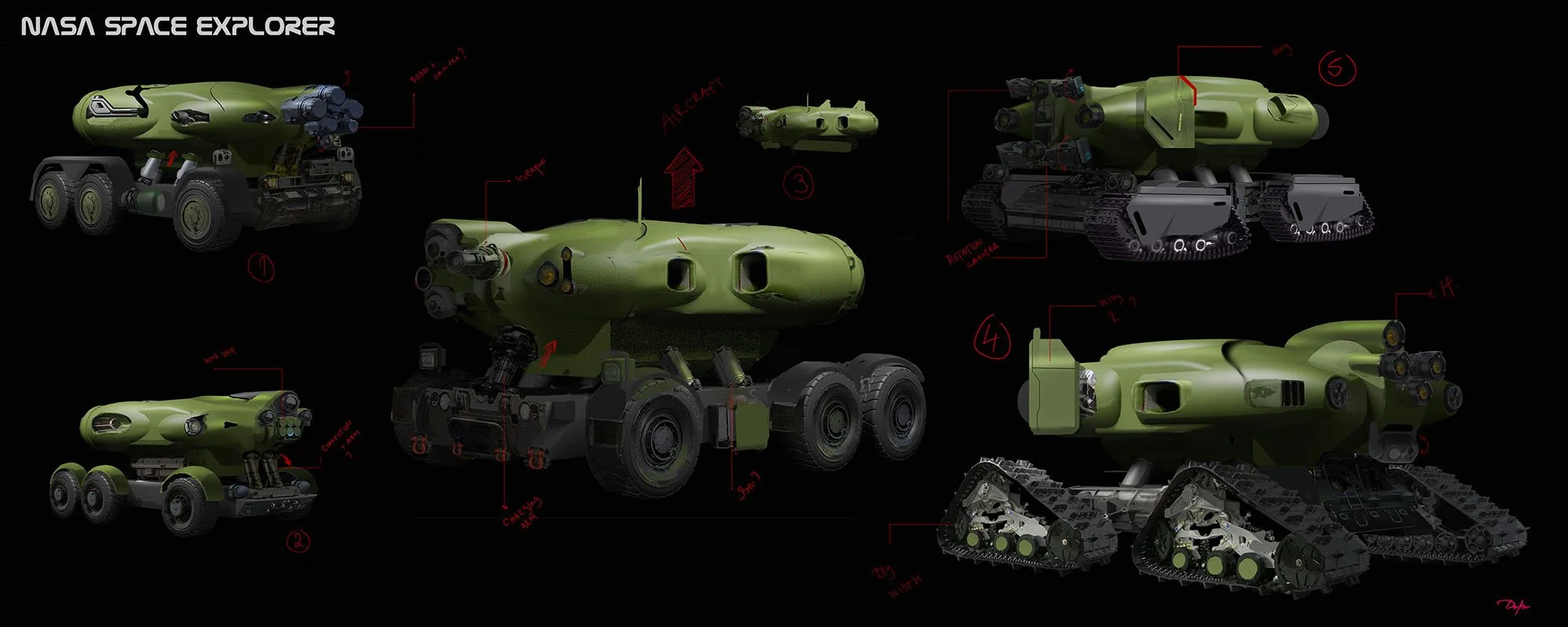
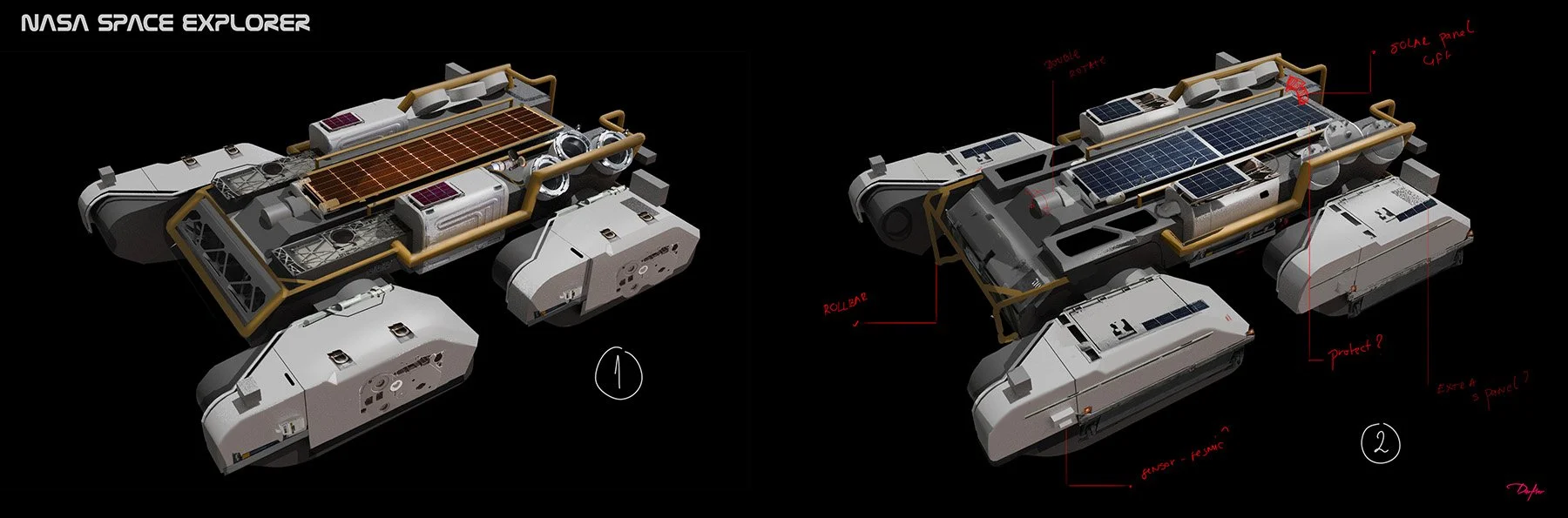
This phase focused on evaluating multiple mobility architectures to assess how the vehicle could traverse varied terrain conditions. Several wheel and drive configurations were explored, each representing a distinct engineering approach rather than a styling exercise.
The objective was to present alternative, application-driven solutions, enabling art direction and engineering ideas review of different mobility strategies and their potential use cases. Engineering and design were developed in parallel, informing one another throughout the process.
Early sketches were used to rapidly test concepts, establish constraints, and define the overall direction before advancing to detailed development.
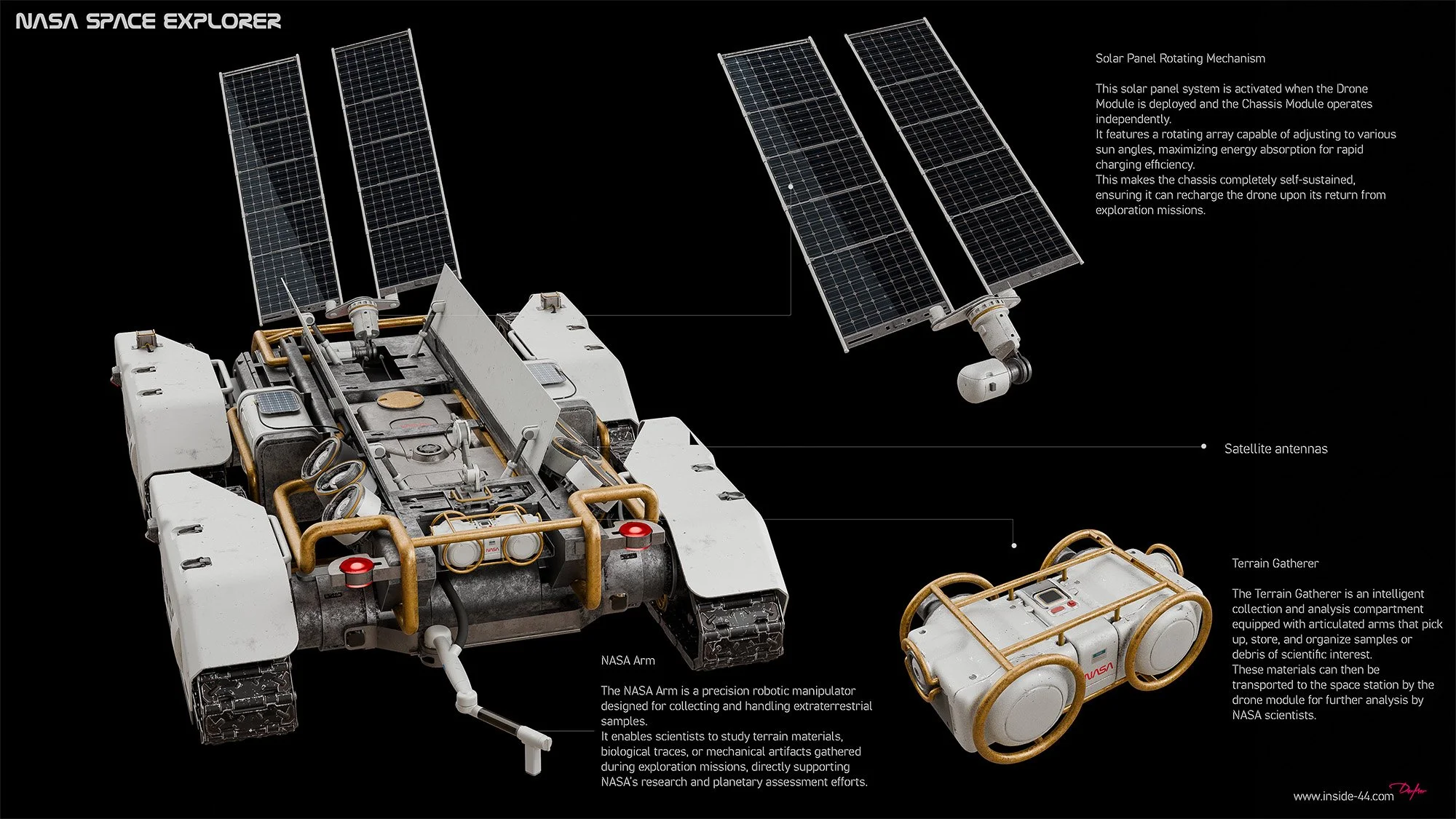
The 3D design was executed to operate at the intersection of real-world engineering and cinematic production, ensuring the asset remains credible, functional, and deployable in both contexts.